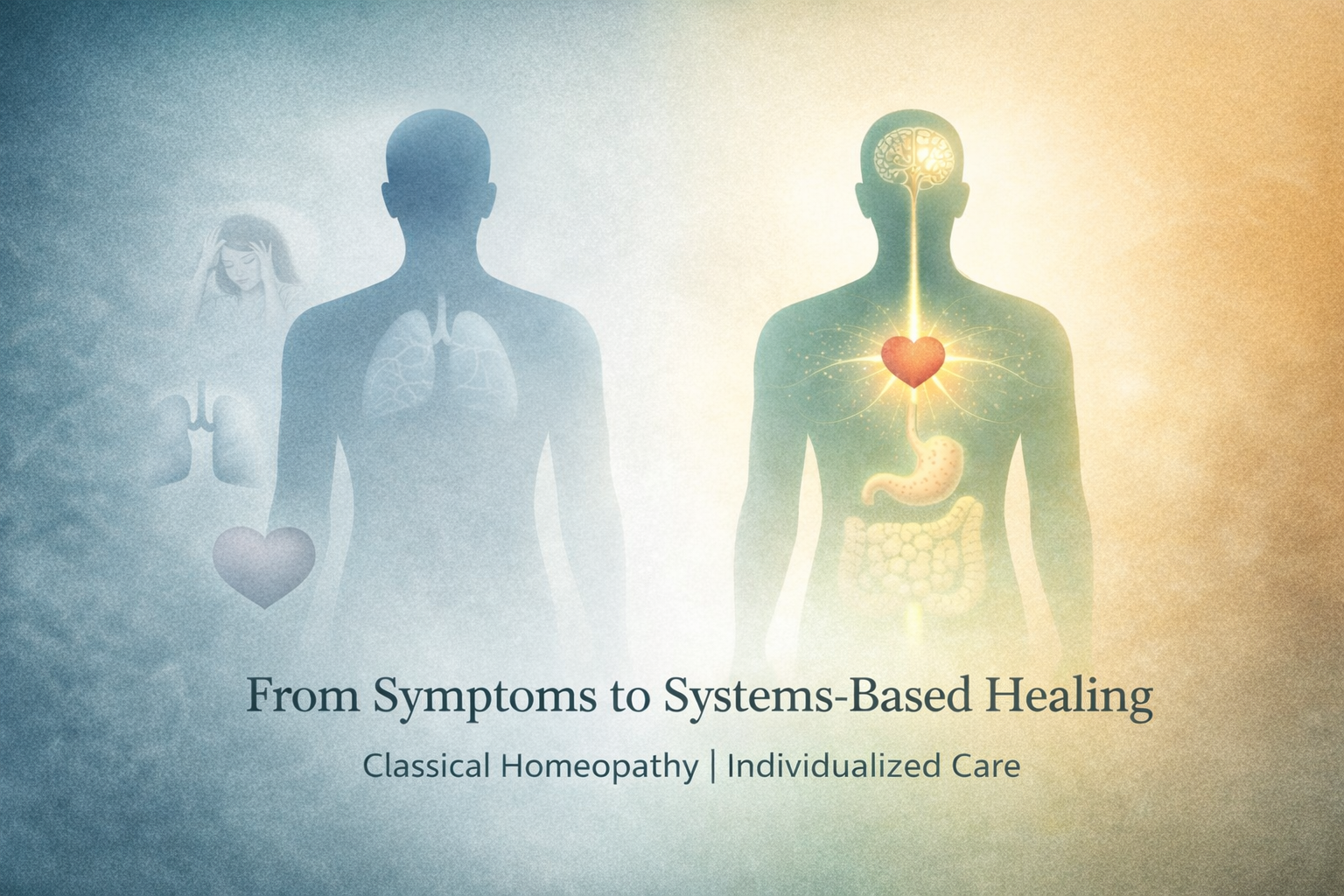
A Science-Informed, Soul-Centered Guide to Individualized Natural Healing
Published on drbenojir.com | Mind | Body | Deen
If you have ever felt that your illness is more than just a diagnosis on a form — that it is tied to your sleep, your stress, your grief, even your personality — then classical homeopathy may speak to you in a language you have been waiting to hear.
Classical homeopathy is one of the world's oldest and most widely used complementary medical systems. Practiced in over 80 countries and chosen by an estimated 200 million people globally (World Health Organization, 2019), it is built on a deceptively simple idea: treat the whole person, not just the disease. In this article, we will explore what classical homeopathy is, how it works, what research says, which remedies are commonly used, and how it fits alongside modern medicine, healthy living, and spiritual well-being.
What Is Classical Homeopathy?
Classical homeopathy was developed in the late 18th century by Dr Samuel Hahnemann, a German physician who was frustrated by the often harmful medical practices of his time. Hahnemann observed that a substance capable of producing symptoms in a healthy person could, when prepared in very small diluted amounts, relieve similar symptoms in someone who was ill. He called this the Law of Similars — or, in Latin, similia similibus curentur: "let like be cured by like."
What makes classical homeopathy different from other approaches — including non-classical or combination homeopathy — is its insistence on a single, carefully chosen remedy, selected on the basis of the patient's complete symptom picture. This means not only the physical complaint, but also the emotional state, energy levels, sleep patterns, food preferences, sensitivities, and even the patient's personality and life history. Two people with the same diagnosis may receive entirely different remedies, because they are different people.
How Does Classical Homeopathy Work?
The short answer is: we do not yet have a complete scientific explanation — and the medical community continues to debate this. Homeopathic remedies are prepared through a process of serial dilution and vigorous shaking (called potentisation), often to the point where very little or no original molecule remains. This is the main reason conventional pharmacologists question the system.
However, emerging areas of research offer intriguing possibilities. Studies published in journals such as Langmuir and the International Journal of High Dilution Research have explored the concept of nanostructures and water memory — the idea that water may retain information about substances it has been in contact with. A 2010 study by Chikramane et al. found nanoparticles of the original substance present even at high dilutions, which challenges older assumptions.
Additionally, the concept of hormesis — where extremely small doses of a substance trigger a beneficial biological response opposite to the effect of large doses — is now well established in mainstream biology and toxicology (Calabrese & Baldwin, Nature Reviews Drug Discovery, 2003). Homeopathy's mechanism may align with this principle, though research remains ongoing.
For now, it is fair to say that the clinical observations of millions of patients and practitioners worldwide sustain interest in homeopathy even while the precise mechanism remains under investigation.
Who Can Benefit from Classical Homeopathy?
Classical homeopathy tends to shine in conditions where conventional medicine offers management rather than cure — particularly chronic, functional, and psychosomatic disorders. Common areas include:
• Chronic respiratory conditions: asthma, allergic rhinitis, recurrent sinusitis
• Digestive disorders: irritable bowel syndrome (IBS), acid reflux, bloating
• Hormonal and gynaecological concerns: PMS, menopausal syndrome, irregular cycles
• Skin conditions: eczema, urticaria, psoriasis
• Mental and emotional health: anxiety, mild depression, grief, stress-related disorders
• Musculoskeletal problems: chronic back pain, arthritis, fibromyalgia
• Paediatric conditions: recurrent ear infections, bedwetting, behavioural concerns
Homeopathy is not a substitute for emergency medicine, surgery, or acute life-threatening situations. It works best as a complement to — not a replacement for — evidence-based care.
Classical Homeopathy: The Individualized Approach
The defining feature of classical homeopathy is individualization. During a consultation, a classical homeopath spends considerable time — often 60 to 90 minutes for a first appointment — exploring every dimension of your experience. The questions may surprise you: What time of day do your symptoms worsen? Do you prefer warmth or cold? How do you respond under pressure? Do you crave salt, sweets, or spicy food? How has your sleep been?
These details are not incidental. They form the basis of what homeopaths call the totality of symptoms — a complete portrait of the individual that points toward a single best-matched remedy, known as the simillimum.
Below are ten of the most commonly indicated remedies in classical homeopathy, each with their key characteristics (keynote symptoms):
1. Arsenicum Album
Suited to individuals who are anxious, restless, and extremely tidy or perfectionistic. Symptoms worsen between midnight and 2 a.m. Great exhaustion with burning pains, relieved by warmth. Commonly used for asthma, anxiety disorders, digestive complaints, and skin conditions.
2. Natrum Muriaticum
The remedy for silent grief. Patients tend to be introverted, sensitive, and prefer solitude when upset. They avoid consolation and may carry long-held emotional wounds. Key uses include headaches, chronic fatigue, thyroid dysfunction, eczema, and depression with grief.
3. Lycopodium Clavatum
The person who presents confidently but privately suffers from deep insecurity and anticipatory anxiety. Symptoms typically worsen between 4 and 8 p.m. Bloating and digestive disturbance worse after eating, especially from legumes and onions. Used in IBS, liver conditions, hair loss, and urinary complaints.
4. Pulsatilla Nigricans
Warm, gentle, emotionally yielding individuals who weep easily and crave open air and company. Symptoms are changeable and shift frequently. Commonly indicated for hormonal imbalance, sinusitis, thick yellowish discharges, and digestive issues in women and children.
5. Sulphur
The philosopher who is full of ideas but may neglect practical self-care. Warm-blooded, tends to have itchy, burning skin conditions. Dislikes bathing and feels worse in heat. Used for chronic skin disorders, digestive complaints, haemorrhoids, and general detoxification states.
6. Calcarea Carbonica
Suited to those who are responsible, reliable, but prone to deep anxiety — particularly about their health and finances. Tend to be chilly, easily fatigued, and crave eggs and sweets. Key uses include hypothyroidism, bone and joint issues, recurrent infections in children, and chronic fatigue.
7. Phosphorus
Open, sociable, creative, and highly sensitive to their environment. They crave cold water and ice-cream, are easily startled by noise, and tend toward bleeding tendencies. Used in respiratory conditions, gastrointestinal bleeding, anxiety with palpitations, and neurological symptoms.
8. Sepia
The worn-out caregiver — classically a woman who has given everything and has nothing left. Indifferent to loved ones, craves spicy or sour foods, and is irritable at home. Major remedy for hormonal imbalance, postnatal depression, menopausal complaints, and pelvic organ conditions.
9. Nux Vomica
The driven, impatient, overworking type — often a professional under pressure who uses stimulants (coffee, alcohol) to cope. Chilly and irritable. Key remedy for digestive complaints (constipation, acid reflux, nausea), insomnia from overactive mind, and hangover states.
10. Belladonna
Suited to sudden, intense, and acute conditions. The onset is rapid, the fever is high, the face is flushed, and the eyes are bright. There may be throbbing pains and heightened sensitivity to light, sound, and touch. Used acutely in fevers, tonsillitis, migraines, and earache.
Note: Remedy selection in classical homeopathy is always individual and based on the totality of symptoms. Please consult a qualified classical homeopath before self-prescribing.
Classical Homeopathy and Modern Medicine: Partners, Not Rivals
It would be a mistake to frame homeopathy and conventional medicine as opposing forces. They are different tools, suited to different jobs.
Conventional (allopathic) medicine is outstanding in emergency situations, surgical intervention, trauma care, infectious disease management, and when structural pathology requires rapid correction. It has saved countless lives and continues to do so.
Classical homeopathy, on the other hand, excels in chronic functional disorders, conditions with a strong psychosomatic component, long-term regulatory imbalance, and cases where conventional treatment provides only partial or symptomatic relief.
An integrative approach — where both systems inform each other — is increasingly being explored in hospitals and clinics around the world. The Bristol Homeopathic Hospital (UK) reported that 70% of patients with chronic diseases seen over a six-year period experienced improvement after homeopathic treatment (Spence et al., Journal of Alternative and Complementary Medicine, 2005).
Always inform all your healthcare providers of every treatment you are receiving, so that they can work together on your behalf.
Lifestyle Modification: The Foundation of Lasting Health
No remedy — homeopathic or conventional — works optimally in the absence of a health-supporting lifestyle. Think of classical homeopathy as the spark; lifestyle is the fuel.
Nutrition
Eat real, minimally processed food. Prioritise fresh fruits, vegetables, whole grains, legumes, and lean protein. Reduce refined sugar, trans fats, and ultra-processed foods, which drive chronic inflammation. Staying well-hydrated (6 to 8 glasses of water daily) supports every system in the body.
Sleep
Sleep is not a luxury — it is when the body repairs itself. Aim for 7 to 9 hours of quality sleep per night. Establish a consistent bedtime routine, reduce screen use 1 hour before sleep, and keep your room cool and dark. Chronic sleep deprivation is associated with increased risk of cardiovascular disease, diabetes, depression, and immune dysfunction (Walker, Why We Sleep, 2017).
Physical Activity
Regular movement is one of the most evidence-backed interventions in medicine. Even 30 minutes of moderate walking, five days a week, reduces the risk of chronic disease, improves mood, enhances immunity, and supports hormonal balance. Find movement you enjoy so that it becomes a pleasure, not a chore.
Stress Management
Chronic stress is a root driver of many of the conditions classical homeopathy is sought for. Practical tools include mindful breathing (just 5 minutes of slow deep breathing activates the parasympathetic nervous system), journalling, spending time in nature, and reducing digital overload. Regular periods of quiet and reflection are essential for nervous system recovery.
Habits and Environment
Avoid or minimise tobacco, recreational drugs, and excessive alcohol — all of which deplete the body's self-healing capacity. Reduce exposure to household chemicals and artificial fragrances where possible. Strong chemical odours can also interfere with homeopathic treatment, so this is doubly relevant for patients pursuing this path.
Mind | Body | Deen: Healing the Whole Human Being
In Islamic understanding, the human being is not merely a physical body or a bundle of symptoms — we are a sacred unity of body (jism), mind (aql), spirit (ruh), and heart (qalb). True healing must address all of these dimensions.
The Mind
Psychological distress is increasingly recognised as a root cause — not merely a consequence — of physical illness. Anxiety, unresolved grief, shame, and chronic worry create measurable physiological changes: elevated cortisol, disrupted immunity, altered gut flora, and hormonal imbalance. Classical homeopathy attends to these emotional layers as part of the healing process, not as an afterthought.
The Body
Islam places enormous value on bodily health as an act of worship. The Prophet Muhammad (peace be upon him) said: "Your body has a right over you" (Sahih Bukhari, 1975). Taking care of our physical health — through sensible nutrition, rest, and medical care — is a religious duty, not merely a personal preference.
The Deen (Spiritual Dimension)
The Quran speaks of healing in the most fundamental terms. Allah (SWT) says: "And when I am ill, it is He who cures me" (Quran 26:80 — Surah Ash-Shu'ara). This verse, spoken by Prophet Ibrahim (AS), beautifully encapsulates the Islamic understanding of medicine: we seek the means, but the cure belongs to Allah alone.
The Prophet (peace be upon him) also said: "Make use of medical treatment, for Allah has not made a disease without appointing a remedy for it" (Abu Dawud, 3855). This hadith is a direct invitation to seek healing through legitimate means — including both conventional and complementary medicine — while placing our ultimate trust in the Creator.
Practices such as regular salah (prayer), dhikr (remembrance of Allah), recitation of the Quran, gratitude (shukr), and tawakkul (reliance on Allah) are not merely spiritual acts — they are deeply therapeutic. Research on mindfulness, gratitude, and prayer consistently shows positive effects on mental health, immune function, and quality of life (Koenig et al., International Journal of Psychiatry in Medicine, 2012).
When we integrate the healing of the body with the healing of the heart and the nourishment of the soul, we arrive at something truly holistic — a medicine for the whole human being.
Common Questions Patients Ask
Q: Is classical homeopathy safe to use alongside my regular medication?
Generally, yes. Homeopathic remedies are highly diluted and are not known to interact pharmacologically with conventional medicines. However, always inform your doctor and your homeopath of all treatments you are receiving, so that your care is coordinated and monitored effectively.
Q: How long does it take to see results?
This depends on the nature and duration of the condition. Acute complaints often respond within hours to days. Chronic conditions that have developed over months or years typically require several months of treatment, with gradual and cumulative improvement. Patience is important — deep healing takes time.
Q: Are homeopathic remedies evidence-based?
The evidence base for homeopathy is mixed and remains an active area of research. While some systematic reviews (Mathie et al., Systematic Reviews, 2014) show positive effects beyond placebo for certain conditions, others remain inconclusive. What is clear is that millions of patients around the world report meaningful benefit, and serious adverse effects are extremely rare. Many integrative medicine practitioners view homeopathy as a valuable complement within a broader healthcare framework.
Q: Can children and elderly patients use classical homeopathy safely?
Yes. The very high dilution of remedies means they are gentle and well-tolerated across all age groups, including infants, pregnant women, and the elderly. Classical homeopathy is particularly popular in paediatric care for conditions such as recurrent ear infections, colic, and eczema.
Conclusion
Classical homeopathy invites us to see illness not as the enemy to be defeated, but as a signal — a message from the body, mind, and spirit that something needs attention and rebalancing. It offers a patient-centred, individualized, and holistic framework that respects the complexity of human health.
In a world of increasing chronic disease, rising rates of anxiety and depression, and a growing desire for medicine that sees the whole person, classical homeopathy remains a profound and meaningful healing tradition. When combined with evidence-informed lifestyle practices, compassionate conventional care, and the spiritual foundations of faith, it can contribute powerfully to lasting health and well-being.
Healing, after all, is not merely the absence of symptoms. It is the restoration of harmony — in body, mind, and soul.
References
World Health Organization (2019). Homeopathy. WHO Global Report on Traditional and Complementary Medicine. Geneva: WHO.
Chikramane, P.S. et al. (2010). Extreme homeopathic dilutions retain starting materials: a nanoparticulate perspective. Langmuir, 26(22), 17360–17364.
Calabrese, E.J. & Baldwin, L.A. (2003). Hormesis: the dose-response revolution. Nature Reviews Drug Discovery, 2, 545–554.
Spence, D.S. et al. (2005). Homeopathic treatment for chronic disease: a 6-year, university-hospital outpatient observational study. Journal of Alternative and Complementary Medicine, 11(5), 793–798.
Mathie, R.T. et al. (2014). Randomised placebo-controlled trials of individualised homeopathic treatment. Systematic Reviews, 3, 142.
Walker, M. (2017). Why We Sleep. Penguin Random House.
Koenig, H.G. et al. (2012). Religion, spirituality, and health: the research and clinical implications. International Journal of Psychiatry in Medicine. ISRN Psychiatry.
Quran 26:80 (Surah Ash-Shu'ara). Translation: Sahih International.
Hadith: Abu Dawud, Book of Medicine, No. 3855. Authenticated by Al-Albani.
Hadith: Sahih Bukhari, No. 1975. Rights of the body.
Dr. Benojir
Classical Homeopath & Islamic Life Coach
Mind | Body | Deen
“We Treat; Allah Heals”