Building Lifelong Health Through Balanced, Mindful Eating Habits
By Dr. Benojir — Classical Homeopath & Islamic Life Coach
Food today arrives faster than ever — delivered, packaged, and often heavily processed. Yet one truth has not changed in thousands of years: what we eat, and how we eat it, quietly shapes nearly every aspect of long-term health.
Many of the chronic conditions seen in clinics today — type 2 diabetes, obesity, digestive disorders, high blood pressure, and hormonal imbalance — are closely tied to daily food choices repeated over years. Yet healthy eating does not mean extreme dieting or rigid restriction. It means balance, awareness, and consistency, applied patiently over a lifetime.
This article explores what healthy eating genuinely means, how it varies across cultures, what current research says about food intolerance and digestive sensitivity, how classical homeopathy approaches individual digestive patterns, and how Islamic teaching frames food as both nourishment and responsibility.
What Do Healthy Eating Habits Actually Mean?
Healthy eating habits refer to regular, balanced, and mindful food choices that nourish the body and support long-term wellbeing. In practice, this includes eating fresh and minimally processed foods, keeping meal times consistent, limiting added sugar and refined carbohydrates, including a daily mix of vegetables, fruits, whole grains, and healthy fats, drinking adequate water, avoiding overeating, and eating at a relaxed, mindful pace rather than rushing through meals.
None of this requires perfection. The defining feature of a genuinely healthy eating pattern is not how strict it is, but how sustainable it is over months and years.
Do Healthy Eating Habits Differ by Region or Culture?
Yes and no. The underlying principles — balance, moderation, variety, and freshness — are universal across every culture and climate. What differs is the specific food on the plate.
In Bangladesh and much of South Asia, a healthy plate often centres on rice, lentils (dal), fish, vegetables, and moderate oil use. In Mediterranean countries, olive oil, fish, legumes, and fresh vegetables form the foundation — a pattern studied extensively for its cardiovascular and metabolic benefits. East Asian diets frequently emphasise fermented foods, rice, vegetables, and seafood, while many Western dietary guidelines now centre on whole grains, salads, nuts, and lean proteins.
The healthiest approach is rarely to copy another culture’s diet wholesale. It is to respect local food availability, climate, individual digestive capacity, and cultural habit — building a pattern that is genuinely practical for the person living it.
The Benefits of Consistent Healthy Eating
When maintained over time, balanced eating habits offer measurable benefits across nearly every system of the body.
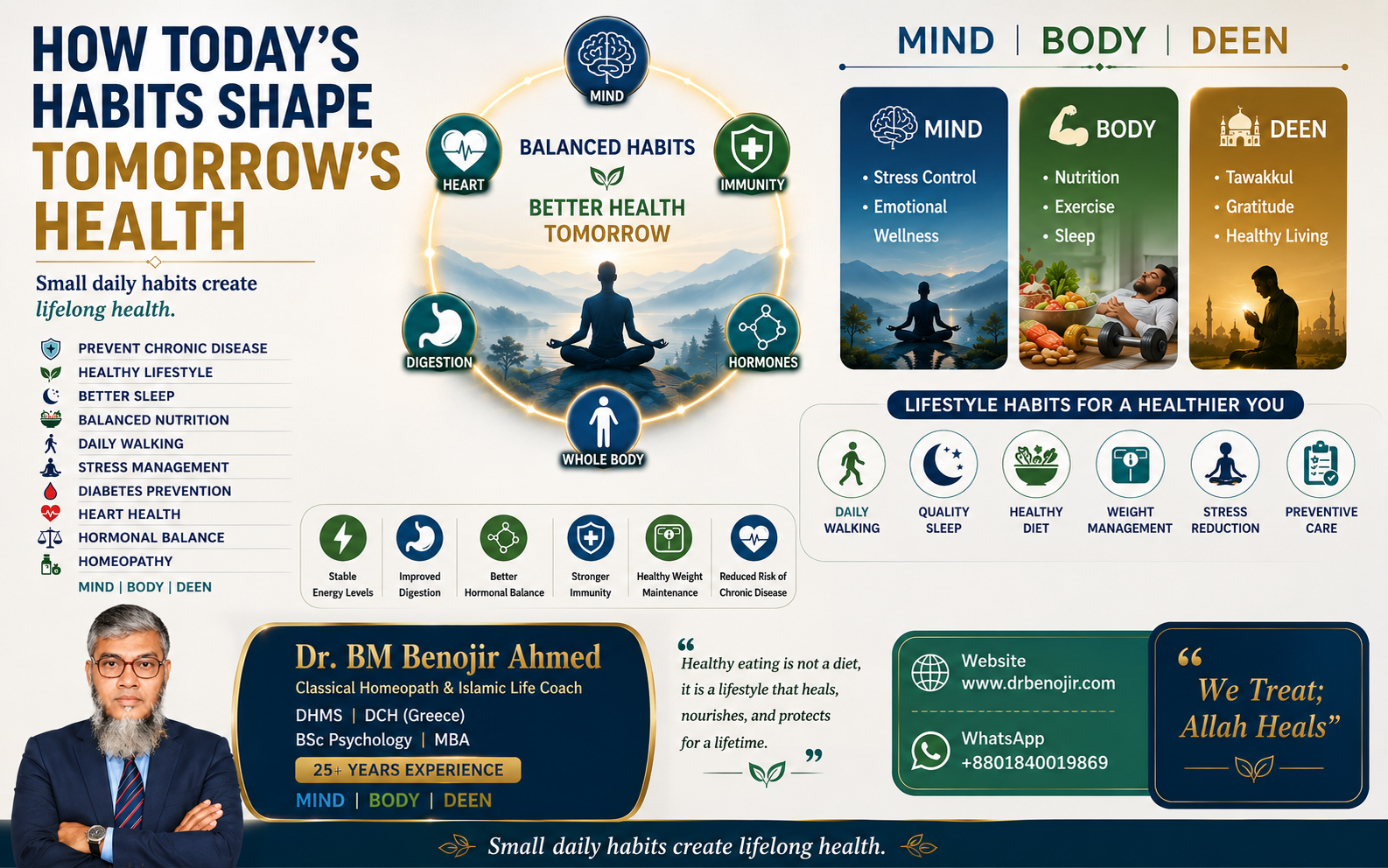
Stable Energy Levels
Balanced meals, eaten at regular intervals, prevent the sharp blood sugar spikes and crashes that leave people feeling drained by mid-afternoon.
Improved Digestion
Fibre-rich foods support healthy gut motility and feed the beneficial bacteria that make up the gut microbiome — a system increasingly recognised as central to overall health, including immune regulation and mood.
Better Hormonal Balance
Regular eating patterns support stable insulin response and contribute to thyroid and reproductive hormone balance, both of which are sensitive to erratic meal timing and nutrient deficiency.
Stronger Immunity
Nutrient-dense foods supply the vitamins and minerals — vitamin C, zinc, vitamin D, and others — that immune cells require to function effectively.
Healthy Weight Maintenance
Balanced portions and regular meal timing naturally reduce the overeating that drives long-term fat accumulation, without requiring calorie-counting or restrictive dieting.
Reduced Risk of Chronic Disease
Sustained healthy eating is consistently associated with a lower risk of diabetes, heart disease, fatty liver disease, and broader metabolic disorders.
How to Maximize These Benefits
Healthy eating works best as part of an integrated lifestyle rather than in isolation.
• Regular sleep helps regulate the appetite hormones leptin and ghrelin, reducing cravings and late-night overeating
• Physical activity improves metabolism, insulin sensitivity, and digestive motility
• Stress management reduces emotional eating, which often drives cravings for sugar and processed comfort foods
• Mindful, slower eating improves nutrient absorption and natural portion regulation
Consistency, sustained across weeks and months, matters far more than occasional strict control followed by relapse.
What Happens If We Ignore Healthy Eating Habits?
Over time, neglecting balanced eating patterns may contribute to obesity, insulin resistance and diabetes, elevated cholesterol, chronic digestive problems, ongoing low-grade inflammation, hormonal imbalance, and persistent fatigue with reduced immunity.
In clinical practice, patients with chronic conditions frequently report years of irregular meals, frequent processed food consumption, late-night eating, or high sugar intake preceding their diagnosis. Disease rarely develops suddenly. It tends to build gradually, through repeated daily choices that individually seem harmless.
Food Intolerance: When the Body Reacts Differently
Some individuals experience discomfort after eating certain foods — milk and dairy, wheat or bread, spicy foods, cold drinks, or oily meals — with symptoms such as bloating, gas, diarrhoea, skin reactions, headaches, or fatigue.
Current research distinguishes carefully between food allergy and food intolerance. Food allergy involves the immune system, typically through IgE antibodies reacting to specific food proteins, and can range from mild symptoms to severe, rapid reactions. Food intolerance, by contrast, is a non-immune reaction — the body’s digestive system struggles to properly break down certain foods or components, leading to gastrointestinal discomfort without involving the immune system in the same way. Understanding which type of reaction is occurring matters, because management and risk differ significantly between the two.
For confirmed allergies, appropriate testing and medical guidance are essential, and temporary or long-term elimination of the trigger food may be medically necessary. For intolerance, the deeper and often more useful question is: why is the body reacting this way, and what underlying digestive pattern does this reflect?
Classical Homeopathy and Individualized Digestive Care
Homeopathy does not approach “milk intolerance” or “wheat sensitivity” as isolated labels to be treated identically in every patient. Classical case-taking instead explores the individual pattern surrounding the complaint: Does bloating worsen at night or after small meals? Is the person anxious, irritable, or emotionally sensitive? Does stress visibly aggravate digestion? Is there a personal or family history of suppressed skin conditions?
This individualized lens is what allows two patients with the same food sensitivity to require entirely different remedies. The following are commonly considered in cases of digestive sensitivity and food-related discomfort.
Lycopodium Clavatum
Often considered for bloating that appears even after small meals, typically worse in the late afternoon or evening. Associated with a craving for sweets and an outwardly confident manner that conceals underlying insecurity.
Nux Vomica
Suited to digestive disturbance linked with stress, overeating, or irregular daily habits — frequently seen in overworked individuals who rely on coffee, alcohol, or rich food to cope with pressure. Acidity and constipation are common accompanying features.
Pulsatilla
Indicated in those who react strongly to rich, fatty, or creamy foods, with digestive upset that improves in open air. Often accompanied by emotional sensitivity, a tendency to weep easily, and a notable desire for reassurance.
Carbo Vegetabilis
Considered for marked bloating and flatulence, particularly after eating, with a sensation of fullness that feels disproportionate to the amount eaten. Sluggish digestion and a craving for fresh air are typical accompanying signs.
China Officinalis (Cinchona)
Often indicated where digestive weakness follows significant fluid loss — prolonged diarrhoea, heavy sweating, or general debility — leaving the digestive system unusually sensitive and prone to bloating from even mild dietary indiscretion.
Natrum Sulphuricum
Considered in digestive complaints that are notably worse after eating fatty or rich foods, with a strong connection to mood — patients often report a clear link between low mood or depression and worsening digestive symptoms.
A note on safe practice: These remedy descriptions are educational examples only. Correct homeopathic prescribing requires a complete individual case history taken by a qualified practitioner. Confirmed food allergies should always be assessed and managed under appropriate medical supervision.
The Connection Between Eating Habits and Root-Cause Care
From a holistic perspective, food is never only nutrition. It reflects lifestyle, emotional patterns, and self-discipline. Overeating often reflects unmanaged stress. Skipping meals frequently reflects chronic overwork. Persistent cravings may point toward emotional imbalance rather than genuine physical hunger.
A person-centred approach considers all of these dimensions together — physical, emotional, and behavioural — rather than addressing the food choice in isolation from the life producing it.
Lifestyle Modification: The Habits That Support Healthy Eating
Sleep and Appetite Regulation
Poor sleep directly disrupts the hormones that regulate hunger and fullness, increasing cravings for high-sugar, high-fat foods the following day. Consistent, adequate sleep is one of the most overlooked tools for sustainable healthy eating.
Physical Activity
Regular movement — even a brisk 30-minute walk — improves insulin sensitivity and supports healthy digestion, making the body more responsive to balanced nutrition.
Stress Management
Chronic stress elevates cortisol, which increases cravings for calorie-dense comfort foods and disrupts normal digestive function. Breathing exercises, regular prayer, time in nature, and adequate rest all help reduce stress-driven eating.
Mindful Eating Practice
Eating slowly, without screens, and paying attention to genuine hunger and fullness cues improves digestion and naturally prevents overeating — a simple habit with disproportionately large benefits.
Mind │ Body │ Deen
In Islam, food is regarded as both nourishment and responsibility — a daily reminder of dependence on Allah’s provision and a call to mindful self-discipline.
The Mind: Mindful Consumption
Overeating, emotional eating, and erratic meal patterns often originate in the mind before they appear on the plate. Cultivating awareness of why we reach for food — genuine hunger versus stress, boredom, or habit — is itself a form of mental discipline central to lasting change.
The Body: Moderation as a Trust
The Prophet Muhammad ❩ is reported to have said: “The son of Adam fills no vessel worse than his stomach. It is sufficient for the son of Adam to eat a few morsels to keep his back straight. If he must eat more, then a third for food, a third for drink, and a third for breath.” (Sunan Ibn Majah). This guidance on moderation mirrors what modern nutritional science independently confirms — that portion control and regular, moderate meals support metabolic health far more reliably than either overeating or extreme restriction.
The Quran reinforces this principle directly in Surah Al-A’raf (7:31): “Eat and drink, but do not be excessive. Indeed, He likes not those who commit excess.” This balance, wasatiyyah, extends beyond food itself into every dimension of daily life.
The Deen: Halal, Tayyib, and Gratitude
Islamic teaching emphasises eating food that is both halal (lawful) and tayyib (wholesome and good), as reflected in Surah Al-Baqarah (2:168): “O mankind, eat from whatever is on earth that is lawful and good.” This pairing of lawful and wholesome encourages believers to consider not only the permissibility of food but also its genuine nutritional quality.
Gratitude (shukr) for provision, patience (sabr) in maintaining healthy routines, and conscious awareness (taqwa) in daily habits together form a spiritual framework that strengthens dietary discipline far beyond willpower alone.
Common Patient Questions
Q: Is it necessary to completely avoid sugar or carbohydrates?
For most people, complete avoidance is unnecessary and difficult to sustain long-term. The evidence consistently favours moderation and reduction of refined sugar and ultra-processed carbohydrates, rather than total elimination, as a sustainable long-term strategy.
Q: How can I tell if I have a food intolerance or a food allergy?
Allergic reactions tend to appear rapidly and can involve skin reactions, swelling, or breathing difficulty, and require prompt medical evaluation. Intolerance symptoms — bloating, gas, mild discomfort — typically develop more gradually and are not immune-mediated. If you suspect a true allergy, proper allergy testing through a qualified physician is essential before self-diagnosing.
Q: Can homeopathy cure a food allergy?
Homeopathy is not a substitute for the medical management of confirmed allergies, particularly where there is any risk of a severe reaction. Individualized homeopathic care may support general digestive balance and reduce hypersensitivity over time, but it should be pursued alongside, not instead of, appropriate medical guidance.
Q: How long does it take to build a genuinely healthy eating habit?
Behavioural research generally suggests that new habits take anywhere from a few weeks to a few months of consistent repetition to feel automatic. Expect early progress in energy and digestion within two to three weeks, with deeper metabolic benefits building steadily over two to three months of sustained practice.
Final Thoughts: Food as Daily Medicine
Healthy eating habits remain one of the most powerful and accessible tools available for disease prevention and long-term wellbeing. They support digestion, hormonal balance, immunity, mental clarity, and emotional stability — quietly, every single day.
When digestive intolerance or chronic symptoms do appear, addressing the underlying pattern — rather than only suppressing the symptom — tends to create deeper, more lasting improvement. No single food is magic. No single remedy is magic. Genuine health is built gradually, through consistent, balanced choices sustained over a lifetime.
We make our best effort. Healing ultimately comes from Allah.
Dr. Benojir
Classical Homeopath & Islamic Life Coach
Mind │ Body │ Deen
“We Treat; Allah Heals”