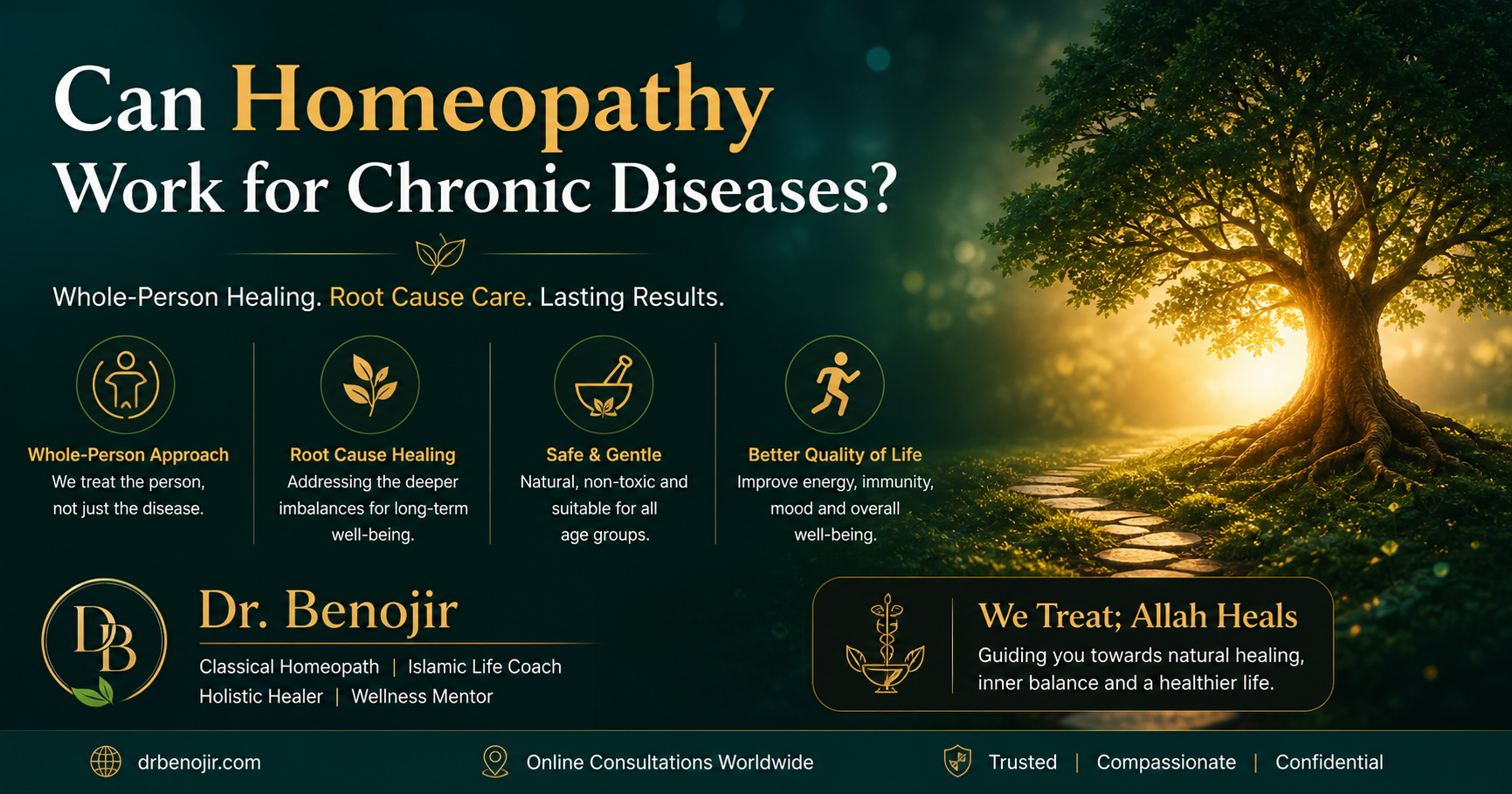
A Holistic, Individualized Path Toward Lasting Balance
When You Are Told “You Have to Live With It”
Many people remember the moment clearly. After months or years of tests, consultations, and medications, they finally hear words like: “Your condition cannot be cured,” or “You will need this medication for life,” or “We can manage it, but not eliminate it.”
For some, this brings relief — a diagnosis at last. For others, it brings disappointment and uncertainty. This experience is common among people living with chronic conditions such as Irritable Bowel Syndrome (IBS), migraine, eczema, psoriasis, allergies, anxiety disorders, chronic fatigue, sleep disorders, thyroid imbalance, stress-related hypertension, and hormonal problems.
Modern medicine has achieved remarkable progress in emergency care, surgery, trauma management, and infectious disease treatment. Yet many chronic conditions remain genuinely challenging for both patients and healthcare providers, and treatment often focuses on controlling symptoms and laboratory values rather than restoring a felt sense of wellness. This is why so many patients still ask, “Why am I still not feeling well?” That question deserves a deeper look.
Understanding How Chronic Disease Develops
Chronic disease is rarely caused by a single event. Most long-term health problems build gradually, shaped by a combination of physical, emotional, environmental, and lifestyle influences.
• Long-term stress may contribute to digestive trouble, insomnia, anxiety, or elevated blood pressure
• Hormonal shifts may gradually affect mood, energy, and metabolism
• Poor sleep can contribute to fatigue, irritability, and lowered immunity
• Irregular eating habits may slowly affect digestion, weight, and overall health
• Unresolved emotional burdens can influence physical symptoms in ways people often do not realize
Over time, these factors interact and create patterns of imbalance affecting the whole person — which is why two people with the same diagnosis can experience very different symptoms and challenges.
The Homeopathic Perspective: Treating the Person, Not Just the Disease
One of the most distinctive principles of Classical Homeopathy is its focus on individuality. Beyond asking “What disease does this person have?”, it also asks who this person is, how the illness affects them, and how they respond emotionally, mentally, and physically.
A homeopathic consultation typically explores physical symptoms, emotional well-being, sleep patterns, energy levels, food preferences, stress factors, personal and family health history, and lifestyle habits. Because every individual differs, treatment is highly personalized: two patients with migraine, for instance, may receive entirely different remedies because their triggers, emotional patterns, and overall constitution differ. This individualized approach is one reason many people turn to homeopathic care for chronic health concerns.
Chronic Conditions Commonly Seen in Homeopathic Practice
While every patient is unique, people commonly seek homeopathic support for a range of long-standing complaints, including:
• Digestive disorders — IBS, chronic constipation, bloating, acidity, and functional digestive complaints
• Skin conditions — eczema, psoriasis, chronic itching, and allergic skin reactions
• Stress and anxiety — general anxiety, anticipatory anxiety, panic tendencies, and emotional stress
• Sleep problems — difficulty falling asleep, frequent waking, and stress-related insomnia
• Hormonal and thyroid conditions — menstrual irregularities, PCOS, thyroid imbalance, and menopausal symptoms
• Headaches and migraine — hormonal, stress-induced, and recurrent patterns
• Fatigue and burnout — mental exhaustion, low energy, and stress-related tiredness
Classical Homeopathy: Commonly Indicated Remedies
Homeopathy does not select remedies by diagnosis alone; it considers the totality of a person's symptoms. The examples below are shared for educational purposes and illustrate how individualized prescribing works — they are not a guide for self-treatment. A qualified Classical Homeopath should always be consulted for an accurate, individualized prescription.
• Nux Vomica — IBS and digestive disturbance in a sedentary, irritable person under work stress, often sensitive to coffee and stimulants
• Argentum Nitricum — anticipatory anxiety with nervousness before events, restlessness, and digestive upset under stress
• Sanguinaria — right-sided, periodic migraine with light sensitivity, sometimes relieved after vomiting
• Sulphur — chronic skin complaints with itching, burning, and symptoms aggravated by heat
• Coffea Cruda — sleeplessness from racing thoughts and mental overstimulation despite physical tiredness
• Ignatia Amara — emotional sensitivity following grief or disappointment, with suppressed feelings and mood swings
• Phosphoric Acid — mental exhaustion and emotional burnout with weakness and low motivation after stress or grief
• Rauwolfia — supportive care for stress-related hypertension accompanied by restlessness and nervous tension
The right remedy always depends on the totality of symptoms rather than the diagnosis alone, which is why an individualized consultation is essential.
Lifestyle Modification: The Missing Piece in Healing
Even the most carefully selected treatment cannot replace healthy daily habits. Lasting healing often comes from the partnership between treatment and lifestyle.
• Sleep — consistent, quality sleep supports hormonal regulation, immune function, emotional balance, and recovery
• Nutrition — a balanced diet with regular meals reduces unnecessary stress on the body and supports long-term health
• Physical activity — regular movement improves circulation, energy, mood, and metabolic health
• Stress management — deep breathing, reflection, prayer, dhikr, mindfulness, and time in nature can ease daily tension
• Digital balance — reducing excessive screen time can improve sleep, concentration, mental clarity, and emotional well-being
Mind | Body | Deen: A More Complete View of Health
True health requires balance across three interconnected dimensions.
Mind — Our thoughts, emotions, beliefs, and stress levels influence every aspect of life. Anxiety, overthinking, grief, unresolved emotional conflict, and chronic stress can affect both mental and physical health.
Body — Physical health includes nutrition, digestion, hormonal balance, sleep, physical activity, and immune function. The body often signals trouble long before serious illness develops, and learning to listen to these signals matters.
Deen — For many people, faith provides real strength during illness. Islam encourages tawakkul (trust in Allah), sabr (patience), shukr (gratitude), hope, and purpose. The Qur'an states, “And when I am ill, it is He who cures me” (Surah Ash-Shu'ara, 26:80), reminding believers that ultimate healing comes from Allah even while seeking treatment. The Prophet Muhammad (peace be upon him) is reported to have said that Allah sends down no illness without also sending down its cure (recorded in Sahih al-Bukhari), encouraging patients to pursue treatment with hope rather than despair.
Mind, Body, and Deen are not separate compartments — they influence one another continuously. When one area suffers, the others are often affected as well.
Healing Takes Time
One of the most important lessons in chronic disease management is patience. Most chronic illnesses did not develop overnight, and meaningful healing rarely happens overnight either. Many patients notice gradual improvements such as better sleep, increased energy, improved digestion, greater emotional stability, reduced symptom intensity, and better resilience to stress. The goal is not simply symptom suppression — it is restoring balance.
A Final Reflection
When a person is told that their condition is “incurable,” hope can fade quickly. Yet healing is often more complex than a diagnosis. Sometimes the body is asking us to look deeper — to understand lifestyle, address stress, improve sleep, strengthen emotional well-being, and reconnect with faith and purpose, treating the individual rather than only the disease.
Classical Homeopathy approaches health through this broader lens — not as a promise of miracles, and not as a replacement for necessary medical care, but as a personalized, holistic approach that seeks to understand the whole person. True healing is often not about fighting symptoms; it is about restoring harmony within the Mind, Body, and Deen.
“We Treat; Allah Heals”
Dr. Benojir
Classical Homeopath & Islamic Life Coach
Mind | Body | Deen