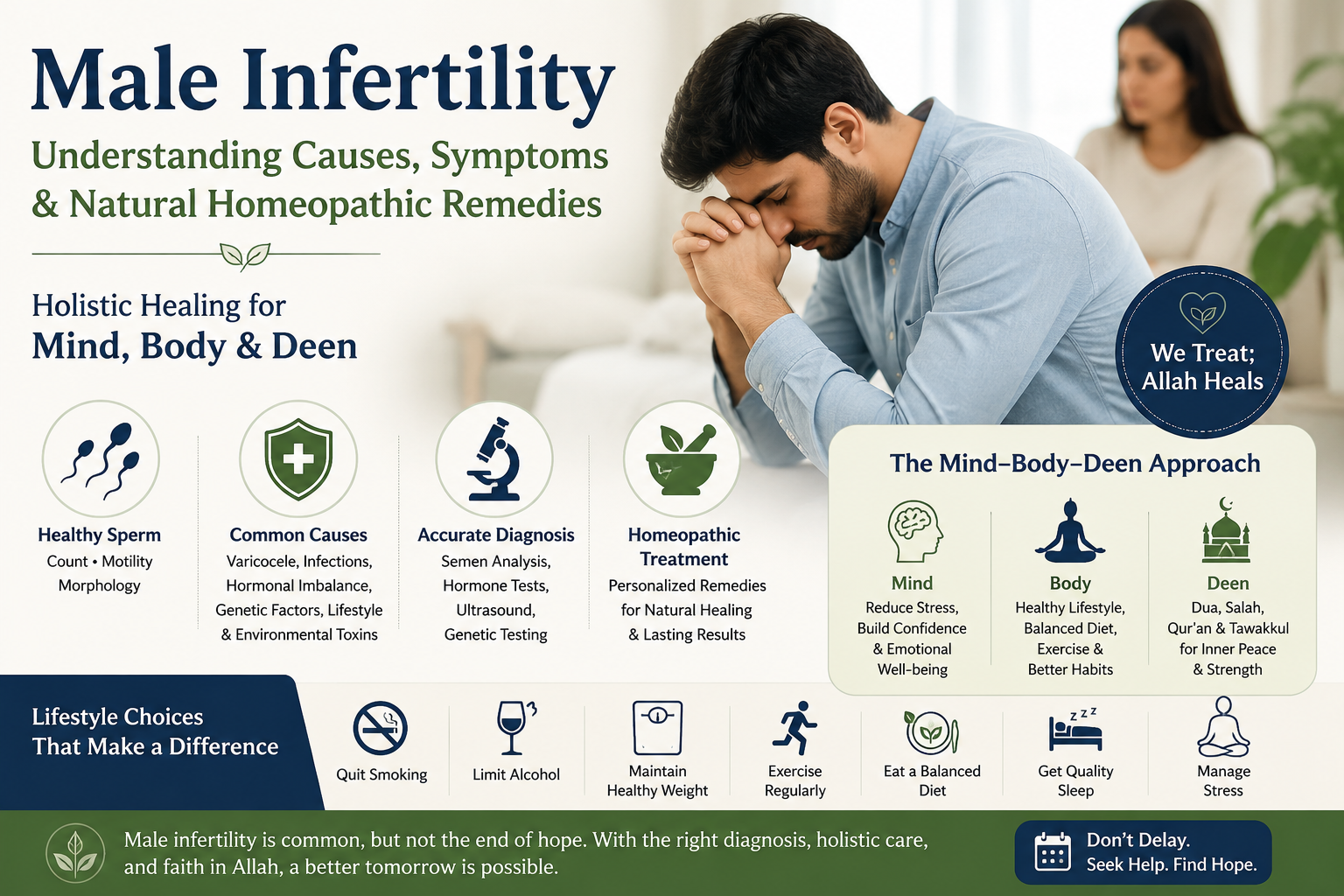
Understanding Causes, Symptoms, Diagnosis & Natural Homeopathic Remedies
What Is Male Infertility?
Male infertility is a condition in which a man is unable to cause pregnancy in a fertile female partner after 12 months or more of regular, unprotected sexual intercourse. It is far more common than most people realize — studies show that male factors contribute to nearly 40 to 50 percent of all infertility cases among couples worldwide. Despite this, male infertility remains an under-discussed health topic, often overshadowed by a cultural stigma that prevents men from seeking timely help.
Infertility in men is usually linked to problems with sperm production, sperm function, or the delivery of sperm. A healthy pregnancy requires sperm that are produced in sufficient numbers, are well-shaped (morphology), and can swim effectively (motility). When any of these factors are disrupted, it can result in difficulty conceiving.
Symptoms of Male Infertility
In most cases, male infertility has no obvious symptoms on its own. The most telling sign is simply the inability to conceive a child after trying consistently. However, depending on the underlying cause, some men may also experience the following:
• Difficulty with sexual function, such as reduced sex drive, trouble maintaining an erection (erectile dysfunction), or problems with ejaculation
• Pain, swelling, or a lump in the testicle area
• Decreased facial or body hair, which may suggest hormonal imbalance
• A lower-than-normal sperm count (fewer than 15 million sperm per milliliter of semen)
• Recurrent respiratory infections in some specific cases
• Inability to smell in rare hormonal conditions like Kallmann syndrome
When Should You See a Doctor?
If you and your partner have been trying to conceive for 12 months without success, it is time to consult a healthcare professional. However, you should consider seeking help sooner — within six months — if any of the following apply:
• You or your partner are over 35 years of age
• You have a known history of testicular, prostate, or sexual problems
• You have had surgery in the groin, testicle, or scrotum area
• Your partner has irregular or absent menstrual cycles or a known reproductive condition
• You have a history of sexually transmitted infections (STIs)
Early evaluation can make a significant difference. Many causes of male infertility are treatable or manageable when identified promptly.
What Causes Male Infertility?
The causes of male infertility are broad and can be grouped into three main categories: medical causes, environmental causes, and lifestyle and other causes.
Medical Causes
Several medical conditions can directly affect sperm production or reproductive function:
Varicocele: This is the most common reversible cause of male infertility. It is a swelling of the veins that drain the testicle, which raises temperature inside the scrotum and impairs sperm production.
Infections: Some infections such as epididymitis, orchitis, or sexually transmitted infections like gonorrhea or HIV can interfere with sperm health or cause scarring that blocks sperm passage.
Ejaculation problems: Retrograde ejaculation — where semen enters the bladder instead of exiting through the penis — can occur due to diabetes, bladder surgery, or spinal injuries.
Hormonal imbalances: Low testosterone (hypogonadism) or disorders affecting the pituitary gland can severely reduce sperm production.
Undescended testicles (cryptorchidism): Men born with one or both testicles that failed to descend from the abdomen have a higher risk of infertility.
Genetic conditions: Klinefelter syndrome (XXY chromosomes) and other chromosomal defects can affect sperm production. Cystic fibrosis and Y-chromosome deletions are also known contributors.
Environmental Causes
Modern environmental exposures play a surprisingly significant role in male reproductive health:
• Exposure to industrial chemicals such as pesticides, herbicides, organic solvents, and heavy metals like lead or mercury can lower sperm count
• Radiation or X-ray exposure to the testicles can reduce sperm production temporarily or permanently
• Prolonged heat exposure — including frequent use of hot tubs, saunas, or even sitting for long hours — raises scrotal temperature and impairs sperm production
• Electromagnetic frequency (EMF) exposure from laptops and mobile phones placed near the groin has been associated with reduced sperm quality in some studies
Health, Lifestyle & Other Causes
• Anabolic steroid use (commonly taken by bodybuilders) causes the testicles to shrink and dramatically reduces sperm production
• Alcohol consumption lowers testosterone levels and impairs sperm quality
• Smoking cigarettes is linked to reduced sperm count and motility
• Being overweight or obese can alter hormone levels that regulate sperm production
• Emotional stress, when prolonged, affects hormone regulation and sexual function
• Prior surgeries in the abdominal or pelvic area, including vasectomy, can cause blockages or scarring
Risk Factors for Male Infertility
Certain factors increase a man's risk of experiencing fertility problems. These include:
• Age over 40, as sperm quality tends to decline with age
• Being overweight or obese
• History of undescended testicles
• Prior infections of the reproductive tract
• Exposure to radiation or toxins at work
• Use of certain medications such as testosterone replacement therapy, chemotherapy, or anabolic steroids
• A family history of fertility problems or genetic disorders
Complications Associated with Male Infertility
Beyond the inability to conceive, male infertility can be associated with certain broader health concerns. Some conditions that cause infertility — such as hormonal imbalances, genetic disorders, or varicoceles — may also increase a man's risk of other conditions including testicular cancer, metabolic syndrome, or cardiovascular disease. On the psychological side, infertility can cause significant emotional distress, strain relationships, and lead to anxiety and depression. Addressing the condition holistically is therefore essential.
Tests & Diagnosis
A proper diagnosis begins with a detailed medical history, physical examination, and a series of targeted tests. The most common diagnostic tools include:
Semen analysis: The cornerstone of male fertility testing. It measures sperm count, shape, motility, and volume. Ideally, two samples taken weeks apart are analyzed for accuracy.
Hormone testing: Blood tests to check levels of testosterone, follicle-stimulating hormone (FSH), luteinizing hormone (LH), and prolactin.
Genetic testing: To identify chromosomal abnormalities or Y-chromosome microdeletions that may affect sperm production.
Scrotal ultrasound: Imaging to detect varicocele, blockages, or structural abnormalities in the reproductive organs.
Testicular biopsy: In some cases, a small tissue sample is taken from the testicle to assess sperm production. This is typically done when a blockage is suspected.
Homeopathic Treatment for Male Infertility
Homeopathy approaches male infertility in a deeply individualized way, treating the whole person rather than just the symptom. Homeopathic remedies aim to stimulate the body's own healing intelligence, correct underlying imbalances, and support reproductive health naturally. Below are five well-established remedies used by homeopathic practitioners for male infertility, each selected based on its characteristic symptom picture:
1. Agnus Castus (Chaste Tree)
Keynote symptoms: This remedy is considered when there is marked sexual debility with almost complete loss of sexual desire and erection. The genitals are cold and relaxed. There is often a history of gonorrhea or excessive sexual indulgence in the past. The person feels prematurely aged, melancholic, and anxious about health. Agnus Castus is one of the top remedies for low sperm count associated with weakness and sexual exhaustion.
2. Selenium Metallicum
Keynote symptoms: Selenium is indicated when there is involuntary seminal emission during sleep, straining at stool, or even while passing urine — without any sexual excitement. The semen is thin, odorless, and watery, pointing to poor sperm quality. There is great weakness and fatigue after even mild exertion. The man may have low sex drive yet still experiences involuntary losses. This remedy is particularly useful in cases of oligospermia (low sperm count) with debility.
3. Lycopodium Clavatum
Keynote symptoms: Lycopodium is suited to men who have a strong desire but lack the power — erectile dysfunction with preserved libido. There is often premature ejaculation or emission too quick. The right testicle may be retracted or painful. The patient tends to be intellectually sharp but physically weak, often with digestive complaints and bloating. Anxiety, lack of confidence, and anticipatory nervousness are classic mental features. Useful when infertility is connected to hormonal imbalance and liver function issues.
4. Caladium Seguinum
Keynote symptoms: Caladium is deeply indicated when the penis is completely relaxed with no sexual desire whatsoever, yet there may be mental excitement. The man may have a strong craving for tobacco, and smoking often worsens the condition significantly. There can be itching of the genitals. Sweetness of urine may attract insects. This remedy is highly relevant for tobacco-related sexual and reproductive dysfunction. Erections are either completely absent or very weak.
5. X-Ray (Radium Bromide related)
Keynote symptoms: Indicated in cases of male infertility resulting from exposure to radiation, X-rays, or toxic environmental substances. There may be azoospermia (complete absence of sperm) or severe oligospermia after such exposure. Burning pain and weakness of the reproductive organs are characteristic. It is used as a constitutional remedy to help the body repair damage at a cellular level following harmful environmental exposures.
6. Phosphorus
Keynote symptoms: Phosphorus is prescribed when there is sexual excess with weakness and burning sensations. The person may have strong sexual desires that lead to overindulgence and subsequent debility. Erections may be frequent but incomplete. There is often fatigue, profuse sweating, and sensitivity to environmental stimuli (light, noise, smells). Phosphorus is also useful where infertility is linked to anxiety, stress, and a weakened nervous system.
Important note: Homeopathic remedies should always be prescribed by a qualified homeopathic physician based on your individual symptom picture, medical history, and constitution. Self-medication is not recommended, especially for conditions as sensitive as infertility.
Lifestyle Modifications That Support Male Fertility
Alongside any treatment — conventional or homeopathic — certain lifestyle changes can dramatically improve sperm health and reproductive outcomes:
• Maintain a healthy body weight: Obesity disrupts testosterone and other reproductive hormones. Even a modest reduction in weight can improve sperm parameters.
• Eat a fertility-supportive diet: Include antioxidant-rich foods such as berries, leafy greens, walnuts, and tomatoes. Zinc (found in pumpkin seeds and legumes) and selenium (from Brazil nuts) are especially important for sperm production.
• Exercise regularly but moderately: Moderate aerobic exercise improves hormone balance and blood flow. However, avoid excessive cycling or overtraining, which can reduce sperm count.
• Quit smoking: Tobacco use is directly linked to reduced sperm count and increased DNA damage in sperm. Quitting can produce measurable improvements within 3 months.
• Quit alcohol intake: Alcohol suppresses testosterone. Keeping consumption minimal or eliminating it entirely supports healthier sperm production.
• Avoid heat exposure to the groin: Keep laptops off the lap, avoid prolonged hot baths and saunas, and wear loose-fitting underwear to keep the scrotal temperature optimal.
• Reduce stress: Chronic stress elevates cortisol, which interferes with testosterone production. Regular relaxation practices are essential.
The Mind-Body-Deen Approach to Infertility
Infertility is not just a physical challenge — it touches the deepest layers of a man's emotional, psychological, and spiritual life. A holistic approach that addresses the mind, body, and soul (deen) can be profoundly healing and empowering.
Mind: Emotional Health & Mental Wellness
Chronic stress and anxiety are well-documented disruptors of hormonal balance and sperm quality. Mind-body techniques such as mindfulness meditation, cognitive behavioral therapy (CBT), and guided relaxation exercises have shown promise in reducing stress hormones. Seeking support from a counselor or joining a fertility support group can help men navigate the emotional pain that often accompanies infertility — reducing feelings of shame, isolation, and helplessness.
Body: Physical Optimization
Yoga and acupuncture have both been studied for their potential benefits in male reproductive health. Yoga improves blood circulation, reduces stress, and balances the endocrine system. Certain yoga poses, such as those that stimulate the root chakra and pelvic floor, are traditionally believed to support reproductive vitality. Acupuncture has been reported to improve sperm motility and count in some clinical studies, likely through its effects on blood flow and stress hormones.
Deen: Spiritual & Soulful Healing
For many men, especially those from faith traditions, infertility is a deeply spiritual journey. Turning to prayer, supplication (du'a), gratitude practices, and trust in God's plan (tawakkul in Islamic tradition, or surrender in other spiritual paths) can provide immense inner peace during what can be a painful waiting period. Spiritual grounding does not replace medical treatment, but it complements it by fostering hope, resilience, and emotional stability. Many couples report that deepening their spiritual practice during fertility challenges strengthened their relationship and their overall sense of wellbeing.
Conclusion
Male infertility is a complex condition with many possible causes, but it is one that can be approached with both medical science and holistic healing. From understanding the root causes and getting an accurate diagnosis, to exploring homeopathic remedies tailored to your individual constitution, making smart lifestyle changes, and nurturing your mental and spiritual health — every step you take brings you closer to your goal. If you are on this journey, know that you are not alone, help is available, and healing is possible.
Always work with a qualified homeopathic practitioner for the best outcomes. A combined approach that respects both conventional medicine and natural healing can offer the most comprehensive and compassionate path forward.
Dr. Benojir
Classical Homeopath & Islamic Life Coach
Mind | Body | Deen
“We Treat; Allah Heals”