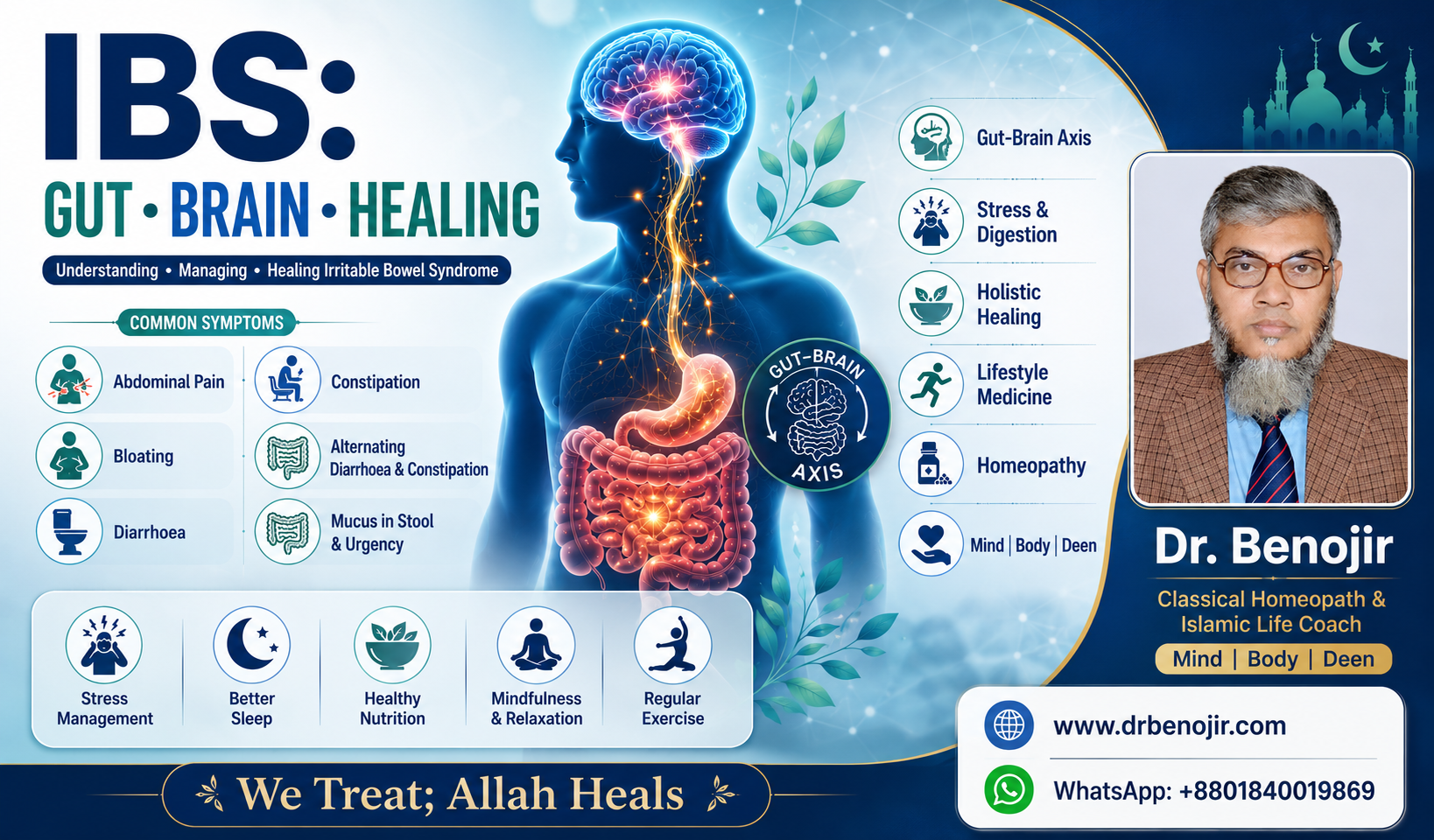
A Holistic Guide to Understanding, Managing, and Healing Irritable Bowel Syndrome
You visit your doctor with persistent stomach cramps, unpredictable bowel habits, and uncomfortable bloating. Tests are run — blood work, ultrasound, colonoscopy — and every result comes back normal. Yet the symptoms persist, affecting your work, your sleep, and your sense of wellbeing. If this sounds familiar, you are far from alone.
This experience describes Irritable Bowel Syndrome (IBS) — one of the most common yet most misunderstood digestive conditions in the world. Affecting an estimated 10 to 15 percent of the global population, IBS is not a disease in the structural sense. There is no visible damage, no tumour, no infection. Yet the suffering it causes is entirely real.
In Bangladesh and across South Asia, IBS prevalence is rising — driven by increasing urban stress, changing food habits, and disrupted daily routines. Understanding IBS means looking far beyond the intestines. It requires understanding the mind, the emotions, the nervous system, and the lifestyle patterns that shape our inner health.
What Is IBS?
Irritable Bowel Syndrome is classified as a functional gastrointestinal disorder. "Functional" means that the digestive system's structure appears completely normal — yet it fails to function normally. The bowel is physically intact, but its behaviour is erratic, unpredictable, and often distressing.
IBS is not inflammatory bowel disease (IBD). It is not Crohn's disease. It is not celiac disease. It does not cause permanent damage to the intestines and is not associated with an increased risk of colon cancer. However, this does not make it minor or trivial — for many people, IBS is a chronic condition that significantly reduces their quality of life.
According to the Rome IV diagnostic criteria — the internationally accepted standard — IBS is defined as recurrent abdominal pain, on average at least one day per week over the past three months, associated with two or more of the following: a change in stool frequency, a change in stool form, or a relationship to defecation.
The Four Types of IBS
Clinicians generally recognise four subtypes of IBS, based on predominant bowel habits:
• IBS-D (Diarrhoea-predominant): Frequent loose or watery stools, urgency, and difficulty controlling bowel movements.
• IBS-C (Constipation-predominant): Hard, infrequent stools, straining, and a persistent feeling of incomplete evacuation.
• IBS-M (Mixed): Alternating episodes of diarrhoea and constipation — often confusing and frustrating for those affected.
• IBS-U (Unclassified): Symptoms of IBS that do not fit clearly into the above categories.
Identifying your subtype matters, because it influences both conventional and holistic treatment approaches.
Recognising the Symptoms
IBS presents differently in different people. Some experience mild, occasional discomfort; others face daily symptoms that disrupt every aspect of life. The most commonly reported symptoms include:
• Abdominal pain, cramping, or aching — often relieved (at least temporarily) by passing stool
• Bloating and visible abdominal distension
• Excess gas or flatulence
• Diarrhoea, constipation, or both in alternating patterns
• Sudden urgency to use the bathroom, sometimes with little warning
• A persistent feeling that the bowel has not fully emptied
• Mucus in the stool
• Digestive discomfort or worsening symptoms after eating
Many people with IBS also report symptoms beyond the gut — fatigue, disturbed sleep, anxiety, depression, back pain, and headaches. This reflects the fact that IBS is a whole-body condition, not merely a digestive one.
Patient Question: "My tests are all normal, so why do I still feel so unwell?" Because IBS is a functional disorder — the problem lies in how the gut works, not in how it looks. Normal tests do not mean nothing is wrong.
What Causes IBS? Risk Factors and Triggers
The exact cause of IBS remains under active scientific investigation, but researchers now understand that it involves a complex interplay of multiple factors — biological, psychological, and environmental. No single cause explains IBS universally.
The Gut–Brain Axis: The Central Story of IBS
Perhaps the most important scientific development in understanding IBS is the recognition of the gut-brain axis — a bidirectional communication highway between the digestive system and the central nervous system. The gut contains over 100 million nerve cells (more than either the spinal cord or the peripheral nervous system), and these nerves communicate continuously with the brain.
This means that emotional experiences are not merely “in your head” — they directly influence intestinal movement, sensitivity, and secretion. Anxiety accelerates gut motility. Chronic stress impairs the gut lining. Unresolved grief or anger can literally manifest as abdominal pain.
People with IBS tend to have a heightened sensitivity in the gut — a phenomenon called visceral hypersensitivity. Sensations that most people would barely notice — a small amount of gas, mild intestinal contractions — are perceived as painful or distressing. This is not exaggeration. It is a genuine difference in nervous system calibration.
Key Risk Factors for IBS
• Chronic psychological stress, anxiety, or depression
• A history of trauma, adverse childhood experiences, or emotional neglect
• Previous gastrointestinal infection (post-infectious IBS can develop after gastroenteritis)
• Female sex — IBS affects women roughly twice as often as men
• Family history of IBS or functional digestive disorders
• Disrupted gut microbiome — an imbalance in the trillions of bacteria living in the intestines
• Irregular meal timing, high intake of processed foods, or food sensitivities
• Sedentary lifestyle and poor sleep habits
• Hormonal changes — many women report symptom fluctuation across the menstrual cycle
The Stress-Gut Connection: A Closer Look
When the body perceives stress, it activates the hypothalamic-pituitary-adrenal (HPA) axis and the sympathetic nervous system — the so-called “fight or flight” response. Stress hormones such as cortisol and adrenaline flood the bloodstream, and the digestive system becomes a lower priority. Blood flow to the gut decreases. Intestinal contractions become irregular. The gut lining becomes more permeable.
In short-term stress, these effects are temporary and reversible. But in people experiencing chronic stress — workplace pressure, financial worry, relationship conflict, social isolation — these physiological changes become sustained, eventually producing the hallmark symptoms of IBS.
Example: A student experiences urgent diarrhoea before every exam. A professional develops abdominal cramping before important presentations. A mother notices her symptoms worsen during family conflict. These are not coincidences — they reflect the direct, measurable influence of the nervous system on gut function.
How Is IBS Diagnosed?
There is no single blood test, scan, or biopsy that can diagnose IBS. It is primarily a clinical diagnosis — meaning it is reached through careful evaluation of symptoms, medical history, and the systematic exclusion of other conditions.
Your doctor may recommend investigations to rule out other causes, which can include similar symptoms. These may include:
• Blood tests: full blood count, inflammatory markers (ESR, CRP), thyroid function, and coeliac antibodies
• Stool tests: to exclude infection, inflammation, or blood in the stool
• Colonoscopy or sigmoidoscopy: particularly for people over 40, or those with alarm symptoms
• Hydrogen breath test: to detect lactose intolerance or small intestinal bacterial overgrowth (SIBO)
Alarm features that require prompt investigation include: unintentional weight loss, rectal bleeding, anaemia, fever, or a family history of colorectal cancer or inflammatory bowel disease. These features are not typical of IBS and must be properly evaluated.
Patient Question: "Do I need a colonoscopy?" Not necessarily. For younger patients with classic IBS symptoms and no alarm features, a colonoscopy may not be immediately necessary. Your doctor will guide you based on your full clinical picture.
Complications and Impact on Quality of Life
While IBS does not cause structural damage to the intestines and is not life-threatening, it can profoundly affect a person’s quality of life. The condition is associated with:
• Chronic anxiety and depression — not merely as causes, but also as consequences of living with unpredictable symptoms
• Social withdrawal — avoiding restaurants, travel, or social gatherings due to fear of symptom flare-ups
• Impaired work performance and increased absenteeism
• Sleep disturbance from discomfort and anxiety
• Nutritional compromise from overly restrictive diets adopted out of fear of triggering symptoms
• Reduced intimacy and relationship strain
Managing IBS holistically means addressing not just the physical symptoms but also the emotional and social dimensions of living with the condition.
Prevention: Building Digestive Resilience
While IBS cannot always be prevented — particularly in those with a genetic predisposition or post-infectious onset — many people can significantly reduce their risk or the severity of their symptoms through proactive lifestyle measures.
• Manage stress actively and early, through regular relaxation practices, exercise, and social connection
• Maintain consistent meal times to support healthy circadian digestive rhythms
• Avoid unnecessary antibiotic use, which can disrupt the gut microbiome
• Treat gastrointestinal infections promptly and adequately to reduce post-infectious IBS risk
• Prioritise sufficient, high-quality sleep
• Develop emotional self-awareness and seek support during periods of significant stress or loss
Conventional Medical Treatment
Modern medicine approaches IBS treatment through a combination of dietary strategies, medications, and psychological therapies. No single treatment works for everyone, and management is typically individualised.
Dietary Approaches
The low-FODMAP diet — developed by researchers at Monash University in Australia — has strong clinical evidence for IBS symptom reduction. FODMAPs are fermentable carbohydrates found in many common foods (wheat, onion, garlic, dairy, certain fruits) that draw water into the intestine and are rapidly fermented by gut bacteria, producing gas and discomfort. A supervised low-FODMAP elimination and reintroduction process helps identify individual triggers.
Other dietary adjustments that many IBS patients find helpful include reducing caffeine and alcohol intake, eating smaller and more frequent meals, increasing soluble fibre (oats, psyllium husk) while being cautious with insoluble fibre, and staying well hydrated.
Medications
Medications used in IBS management depend on the predominant symptom pattern and may include antispasmodics (such as hyoscine or mebeverine) for cramping, laxatives or secretagogues for constipation-predominant IBS, loperamide for diarrhoea-predominant IBS, and low-dose antidepressants — not primarily for mood, but for their effects on gut nerve sensitivity. Probiotics may also be recommended, though the evidence varies by strain.
Psychological Therapies
Given the central role of the gut-brain axis, psychological interventions are often highly effective in IBS management. Cognitive Behavioural Therapy (CBT) has the strongest evidence base and has been shown in multiple clinical trials to significantly reduce IBS symptom severity. Gut-directed hypnotherapy — which uses hypnotic suggestion to calm the nervous system’s influence on the gut — is another evidence-based approach. Mindfulness-Based Stress Reduction (MBSR) programmes are also gaining recognition in IBS management.
Classical Homeopathy for IBS
Classical homeopathy offers a distinctive approach to IBS — one that treats the individual rather than the disease label. Rather than matching a single remedy to a diagnosis, the classical homeopath takes a comprehensive case, exploring the unique pattern of physical symptoms alongside the person’s emotional state, temperament, stress responses, sleep, appetite, and life circumstances.
In classical homeopathy, two people with the same IBS diagnosis may receive entirely different remedies, because their individual symptom patterns differ. The goal is not to suppress digestive symptoms but to restore the person’s overall regulatory balance — the “vital force” — so that the digestive system can function harmoniously.
The following are among the most commonly indicated homeopathic remedies in IBS, each with its own characteristic keynote picture. These are offered for educational purposes only. Individual treatment always requires professional homeopathic consultation.
Commonly Indicated Remedies
1. Argentum Nitricum — The Anxious, Anticipatory Gut
• Diarrhoea triggered by nervous anticipation — before exams, interviews, or important events
• Marked abdominal bloating with noisy, distending gas
• Strong craving for sweets, which may worsen symptoms
• Restless, hurried, and impulsive personality under pressure
• Fears and phobias often accompany digestive complaints
2. Colocynthis — Cramps, Anger, and Bending Double
• Intense, violent abdominal cramps or colic relieved by strong pressure on the abdomen
• Pain that compels the person to bend forward or press the abdomen into a firm surface
• Symptoms frequently triggered or worsened by suppressed anger or emotional indignation
• Short-tempered, easily offended, and sensitive to perceived injustice
• Diarrhoea or spasm following an outburst or emotional confrontation
3. Aloe Socotrina — Urgency, Morning Rush, and Loss of Control
• Sudden, urgent morning diarrhoea, often driving the person out of bed
• Characteristic gurgling and rumbling in the abdomen before stool
• Difficulty maintaining control over bowel urgency
• Heaviness and a bearing-down sensation in the rectum
• Person may feel uncertain whether gas or stool will pass
4. Podophyllum Peltatum — Profuse, Gushing Early Morning Stools
• Profuse, watery, and gushing diarrhoea, predominantly in the morning
• Audible abdominal gurgling and rumbling before bowel movement
• Marked weakness and fatigue following stool
• Frequent urge with stools that may change in character throughout the day
• Alternating diarrhoea and constipation in some presentations
5. Nux Vomica — The Driven, Overworked, Constipated Gut
• Constipation with frequent, ineffectual urging — the person feels the urge but little is passed
• Digestive complaints strongly linked to overwork, excessive ambition, and mental exhaustion
• Highly sensitive to noise, light, odours, and criticism
• Frequent use of stimulants — coffee, spicy food, alcohol — which aggravate symptoms
• Irritable, impatient personality with a strong need for order and control
6. Anacardium Orientale — Empty Stomach Distress and Inner Conflict
• Distinctive relief of digestive discomfort from eating — symptoms worsen when the stomach is empty
• Inner conflict, low self-esteem, and poor confidence often accompany physical symptoms
• Alternating states — gentle at one moment, irritable the next
• Memory difficulties and difficulty concentrating under stress
• Sensation of a plug or obstruction in the bowel
7. Asafoetida — Reversed Peristalsis and Upward Pressure
• Excessive flatulence with a characteristic sensation of pressure rising upward from the abdomen
• Loud, forceful belching that provides only temporary relief
• Reversal of peristalsis — the gut seems to push contents in the wrong direction
• Extreme hypersensitivity to emotional stress
• Bloating and distension that feels almost explosive
8. Dioscorea Villosa — Gas Pain Relieved by Standing and Stretching
• Severe, cutting abdominal pain from gas accumulation, relieved markedly by standing upright or bending backward
• Pain worsened by bending forward (the opposite of Colocynthis)
• Rumbling and gurgling throughout the abdomen
• Radiating pain from the abdomen to the back, chest, or extremities
• Irregular digestion with alternating complaints
9. Lycopodium Clavatum — Bloating After Small Meals and Performance Anxiety
• Severe bloating and fullness after eating only a small amount of food
• Craving for sweets and warm drinks
• Flatulence particularly in the lower abdomen, with rumbling and gurgling
• Anxiety and lack of confidence despite an outwardly controlled appearance
• Symptoms typically worse in the late afternoon (4 to 8 pm)
10. Sulphur — The Hot, Hungry, Hurried Morning Rush
• Sudden urgent diarrhoea, classically driving the person out of bed at 5 am
• Burning sensation in the rectum during and after stool
• The person feels hot, is averse to bathing, and craves spicy or fatty foods
• Philosophical, intellectually active mind that tends to overthink
• Chronic or recurrent IBS with a sluggish and recurrent pattern
Important Note: Homeopathic prescribing for IBS is an individualised and dynamic process. The remedy that fits you is determined not just by your digestive symptoms but by your full human picture — your emotions, your fears, your lifestyle, and your personal history. Please consult a qualified classical homeopath for personalised guidance.
Lifestyle Modification: The Healing Foundation
No remedy — conventional or homeopathic — works optimally in isolation. Sustainable healing from IBS almost always requires meaningful changes in daily habits. These are not peripheral additions to treatment; they are central to recovery.
Nourish with Rhythm: Diet and Meal Timing
Eating at consistent times each day supports the body’s natural digestive rhythms. The gut operates partly on circadian timing — irregular meal patterns confuse these rhythms and increase functional symptoms. Aim for three meals per day at regular times, with limited snacking in between.
Keep a simple food and symptom diary for two to four weeks. Common personal triggers include wheat, dairy, onion, garlic, coffee, alcohol, carbonated drinks, and fried foods — though these vary significantly from person to person. Avoid drastic elimination diets without professional guidance, as they can lead to nutritional deficiency and increase anxiety around food.
Include natural probiotics in your diet where culturally appropriate — yoghurt with live cultures, fermented vegetables, or kefir. A healthy gut microbiome is increasingly recognised as central to IBS management.
Move Your Body, Move Your Gut
Regular physical movement is one of the most consistently beneficial lifestyle interventions for IBS. Exercise reduces cortisol levels, stimulates intestinal motility, improves mood, and supports healthy sleep. Even 30 minutes of brisk walking five days per week can produce meaningful symptom improvement. Find an activity you genuinely enjoy — whether that is walking, swimming, cycling, stretching, or light yoga — and build it into your routine consistently.
Prioritise Deep, Regular Sleep
Sleep is not merely rest — it is an active period of cellular repair, hormonal regulation, and gut-brain recalibration. Chronic sleep deprivation increases cortisol, disrupts gut motility, and heightens visceral sensitivity. Aim for seven to eight hours of quality sleep per night. Establish a regular sleep and wake time, limit screen exposure in the hour before bed, and create a calm pre-sleep environment.
Manage Stress Before It Manages You
Stress management is not optional in IBS — it is a clinical necessity. The nervous system directly governs gut function, and sustained stress perpetuates and worsens IBS symptoms. Practical, evidence-supported strategies include:
• Diaphragmatic breathing: slow, deep belly breathing for five to ten minutes activates the parasympathetic nervous system, reducing gut hypersensitivity
• Progressive muscle relaxation: systematically tensing and releasing muscle groups reduces whole-body tension
• Regular journaling: writing about worries and stressors externalises them and reduces their physiological impact
• Professional psychological support: CBT and mindfulness-based approaches have strong evidence in IBS and are worth pursuing if stress is a significant trigger
• Social connection: meaningful relationships buffer the physiological effects of stress and reduce isolation
Reduce Gut Irritants
Some substances are known to aggravate gut sensitivity, particularly in IBS-prone individuals. Reducing or eliminating excessive caffeine, alcohol, carbonated beverages, artificial sweeteners (particularly sorbitol and mannitol), and highly spiced or fatty foods often leads to noticeable improvement. This is not about permanent deprivation but about listening to your body and making informed choices.
Mind | Body | Deen: The Integrated Healing Perspective
IBS is a condition that beautifully illustrates a truth that traditional and spiritual wisdom has always held: the human being is not a body with a mind attached, but an integrated whole — physical, emotional, mental, and spiritual — in constant relationship with each other.
Mind: The Emotional Roots of Digestive Distress
Modern research has confirmed what sensitive individuals have always known: the gut feels our emotions. Fear before a difficult conversation. Grief after a loss. Anger that was never safely expressed. Worry about an uncertain future. All of these emotional experiences register in the body as physiological events — and the gut is one of the most sensitive registers we have.
Addressing IBS at its root often means addressing the emotional patterns that fuel it. This might involve learning to recognise and name emotions, developing healthier responses to stress, processing old wounds with professional support, and cultivating greater self-compassion. Anxiety about symptoms itself becomes a trigger — a cycle that must be gently and patiently unwound.
Body: Listening to the Language of Symptoms
The body’s symptoms are not adversaries to be silenced but signals to be understood. In IBS, the digestive system is communicating something important — about overload, about imbalance, about the need for change. Healing begins with the willingness to listen, to slow down, and to respond with care rather than suppression.
Physical care for IBS involves the consistent habits described above: rhythmic eating, regular movement, adequate sleep, and the gradual identification of individual triggers. It involves patience — because the gut, once sensitised, takes time to calm.
Deen: The Spiritual Dimension of Health
In the Islamic healing tradition, the body and soul are inseparable. The Prophet Muhammad (peace be upon him) said: “There is no disease that Allah has created, except that He also has created its treatment.” This is a profound source of hope for the IBS sufferer — that healing is possible, and that seeking it is itself an act of worship.
Salah (prayer), performed five times daily, is not only a spiritual obligation but a form of mindfulness, breathing exercise, physical movement, and emotional regulation — all of which benefit the nervous system and, through the gut-brain axis, the digestive system. The practice of dhikr (remembrance of Allah) soothes the restless mind. Fasting during Ramadan, when observed with care, can offer the digestive system a meaningful period of rest and recalibration.
Tawakkul — placing trust in Allah after making one’s sincere effort — is the antidote to the anxious rumination that so often drives IBS. The believer who understands that their wellbeing is ultimately in Allah’s hands, and who acts accordingly, carries a lighter burden than one who bears it alone.
“Verily, with hardship comes ease.” Surah Al-Inshirah, 94:5 — A reminder that the struggle of IBS does not persist indefinitely, and that healing unfolds in its own divinely appointed time.
When to Seek Medical Attention
While IBS is a benign condition, certain symptoms require prompt medical evaluation to exclude more serious diagnoses. Seek professional advice without delay if you experience:
• Unintentional and unexplained weight loss
• Blood in the stool or black, tarry stools
• Rectal bleeding
• Persistent fever
• Severe, worsening, or unremitting abdominal pain
• New digestive symptoms in a person over the age of 50
• A family history of colorectal cancer or inflammatory bowel disease
These are not features of typical IBS and require thorough investigation by a qualified physician.
A Final Word: Healing is a Journey
IBS is not a life sentence. It is a condition that, with understanding, patience, and the right combination of approaches, can be managed effectively — and for many people, resolved or substantially improved.
Healing from IBS rarely happens through a single intervention. It unfolds gradually, through a series of small, consistent changes: in diet, in sleep, in movement, in emotional awareness, in the way we respond to stress. It may involve conventional medicine, homeopathy, dietary adjustment, psychological support, spiritual practice, or any combination of these — tailored to the individual.
The most important step is to stop suffering in silence and to seek informed, compassionate care. Your gut is trying to tell you something. It is worth listening.
Dr. Benojir
Classical Homeopath & Islamic Life Coach
Mind | Body | Deen
“We Treat; Allah Heals”