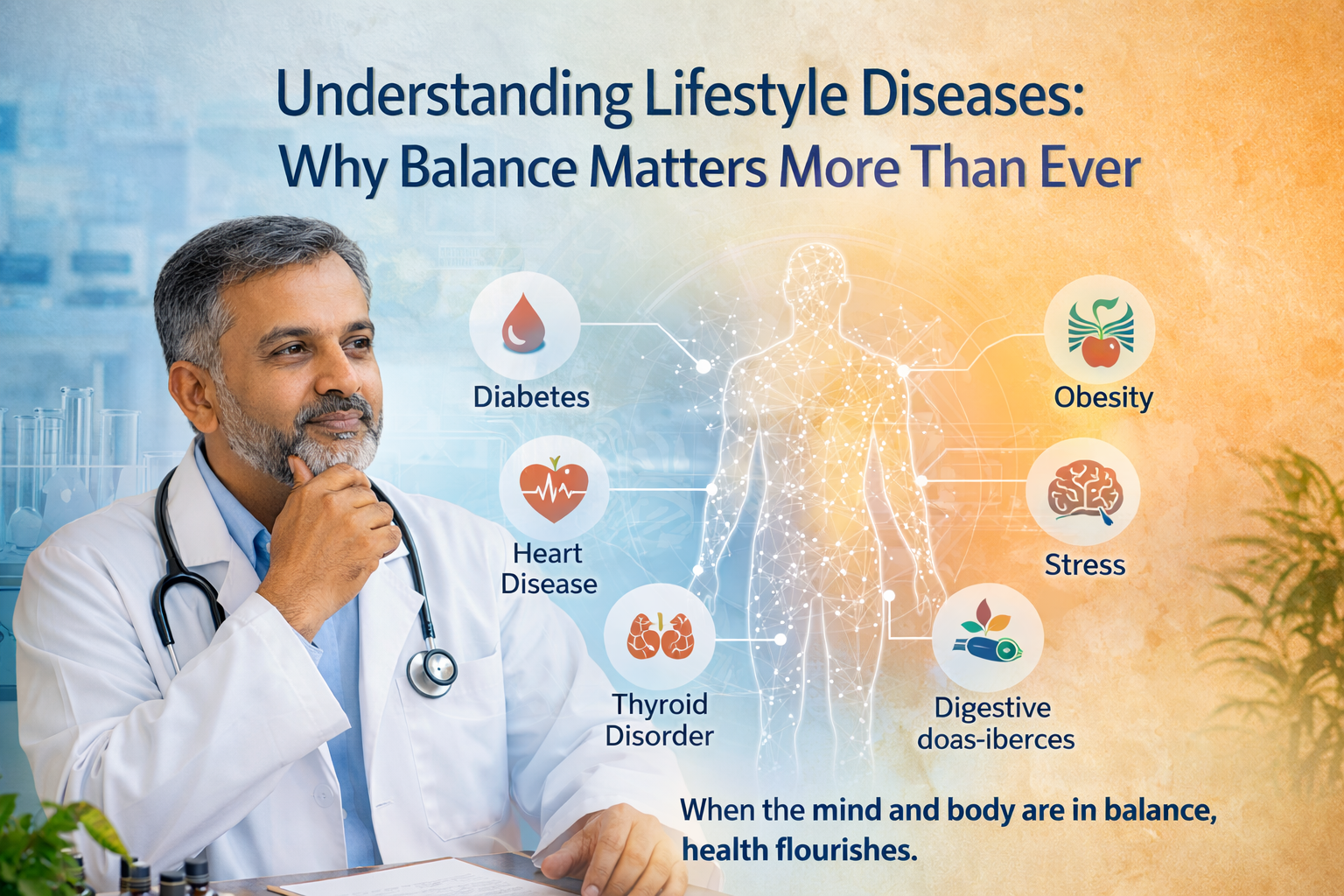
How Daily Habits Shape Chronic Illness – and How Holistic Care Can Help
Diabetes, high blood pressure, obesity, thyroid disorders, and stress-related illness are now appearing in people in their twenties and thirties – a shift that would have been unusual a generation ago. These are called lifestyle diseases, because they develop gradually from the way we eat, move, sleep, and handle stress, rather than from an infection or a single genetic cause.
The encouraging news is that because lifestyle diseases are shaped by daily habits, they can also be influenced – often significantly – by changing those same habits. This article explains what lifestyle diseases are, how they develop, and how a holistic approach combining medical awareness, individualized classical homeopathy, lifestyle change, and spiritual wellbeing can support long-term health.
What Are Lifestyle Diseases?
Lifestyle diseases are chronic health conditions that develop primarily from sustained unhealthy habits and stress, rather than from infection alone. They tend to progress silently over months or years before becoming noticeable. Common examples include type 2 diabetes, hypertension, obesity, heart disease, thyroid disorders, digestive problems, hormonal imbalances, sleep disorders, and stress-related illness. These conditions are frequently interconnected – for instance, poor sleep can worsen weight gain, which in turn raises the risk of high blood pressure and diabetes.
Causes: How Lifestyle Diseases Develop
Several everyday factors, often acting together over a long period, contribute to the gradual onset of lifestyle diseases:
• Poor dietary habits – frequent processed food, refined sugar, unhealthy fats, and irregular meal timing strain digestion and metabolism.
• Sedentary routine – limited physical activity slows metabolism and weakens circulation.
• Chronic stress – persistently elevated stress hormones can disrupt metabolism, immunity, and sleep.
• Sleep deprivation – inadequate or irregular sleep affects hormonal regulation and mental clarity.
• Emotional suppression – long-unexpressed feelings such as grief or anger are increasingly recognized as influencing physical health.
• Environmental exposure – pollution and certain chemicals may interfere with hormonal and metabolic balance.
Recognizing the Symptoms
Because lifestyle diseases progress slowly, early symptoms are often subtle and easy to dismiss. Common early signs include persistent fatigue, unexplained weight changes, disturbed sleep, frequent headaches, digestive discomfort, low mood or irritability, and reduced stamina for everyday tasks. A frequent patient question is, “I feel tired all the time, but my reports look fine – what does that mean?” Often, this reflects an early imbalance that has not yet shown up clearly on standard tests, which makes attention to lifestyle and overall wellbeing especially important at this stage.
Diagnosis and Risk Factors
Diagnosis typically involves a clinical history, physical examination, and relevant investigations such as blood sugar, lipid profile, thyroid function, or blood pressure monitoring, depending on the suspected condition. Risk increases with a family history of chronic disease, sedentary work, high stress occupations, irregular sleep, smoking or excessive alcohol use, and a diet high in processed foods. Recognizing personal risk factors early allows for timely, preventive action.
Complications if Left Unmanaged
Untreated or poorly managed lifestyle diseases can lead to serious complications over time, including cardiovascular disease, nerve and kidney damage from long-standing diabetes, joint strain from obesity, hormonal disorders, and a general decline in quality of life. This underlines why early lifestyle correction and timely medical guidance matter, even when symptoms initially feel minor.
Prevention and the Role of Modern Medicine
Modern medicine plays an essential role in screening, diagnosis, and management of lifestyle diseases, including medication when required to control blood sugar, blood pressure, or other parameters. Regular health check-ups, especially after age thirty or with a family history of chronic illness, allow early detection. Preventive strategies – healthy diet, physical activity, stress management, and adequate sleep – remain the foundation recommended by health authorities worldwide for reducing the risk of these conditions.
Classical Homeopathy for Lifestyle Diseases
Classical homeopathy approaches lifestyle diseases by considering the person as a whole – physical symptoms, mental state, emotional patterns, and individual constitution – rather than treating a diagnosis in isolation. Two people with the same condition, such as thyroid imbalance, may receive different remedies based on their unique presentation. This individualized approach is intended to work alongside, not replace, appropriate medical evaluation.
The following remedies are commonly referenced in classical homeopathic literature for patterns seen in lifestyle-related conditions. They are shared for educational awareness; an experienced homeopathic physician should always be consulted for proper case assessment and remedy selection.
• Sulphur – for sluggish metabolism with careless habits, Keynotes: heat intolerance, skin complaints, untidy appearance, philosophical but disorganized mind.
• Natrum muriaticum – for stress-linked illness and suppressed emotion, Keynotes: withdrawal after grief, aversion to consolation, salt cravings.
• Calcarea carbonica – for slow metabolism and weight gain, Keynotes: fatigue on exertion, chilliness, anxiety about health, craving for eggs or starches.
• Lycopodium – for digestive disturbance and low confidence, Keynotes: bloating soon after eating, irritability before meals, outward dominance hiding inner insecurity.
• Nux vomica – for overwork, irregular routine, and stimulant overuse, Keynotes: irritability, oversensitivity, digestive upset after rich food or excess coffee/alcohol.
• Sepia – for hormonal imbalance, especially in women, Keynotes: exhaustion, irritability, indifference to usual interests, menstrual irregularity.
• Ignatia amara – for conditions triggered by grief or emotional shock, Keynotes: sighing, lump-in-throat sensation, contradictory or rapidly changing symptoms.
• Pulsatilla – for hormonal fluctuation and emotional sensitivity, Keynotes: tearfulness, changeable moods, symptoms better in open air, desire for sympathy.
• Lachesis – for hormonal excess patterns, including menopausal symptoms, Keynotes: hot flashes, intensity of emotion, left-sided complaints, talkativeness.
• Calcarea phosphorica – for fatigue and delayed recovery with poor nutrition, Keynotes: weakness, bone or growth-related complaints, desire for change of scenery.
Lifestyle Modification: The Foundation of Healing
Whatever treatment approach is chosen, sustainable improvement in lifestyle diseases depends heavily on daily habits:
• Diet: Favour whole, minimally processed foods; reduce refined sugar and unhealthy fats; keep meal timings regular.
• Physical activity: Aim for at least 30 minutes of walking, stretching, or light exercise most days of the week.
• Sleep: Maintain a consistent sleep and wake time, and limit screens for at least 30 minutes before bed.
• Stress management: Short daily practices such as deep breathing, prayer, or journaling can help regulate stress hormones.
• Emotional awareness: Acknowledging and expressing feelings, rather than suppressing them, supports both mental and physical health.
A common question patients ask is, “Can I reverse my condition through lifestyle change alone?” The answer depends on the condition, its stage, and individual factors – some early-stage conditions respond remarkably well to sustained lifestyle change, while others require ongoing medical management alongside healthier habits. A doctor’s individualized assessment is the safest guide.
Mind | Body | Deen: A Holistic Reflection
Lifestyle diseases are, in many ways, a reflection of how we live, think, and respond to the pressures of daily life. Caring for the body is, in Islamic teaching, also a form of caring for a trust given by Allah. The Qur’an instructs moderation in all things: “Eat and drink, but do not be excessive. Indeed, He does not like those who commit excess.” (Surah Al-A’raf, 7:31). This guidance speaks directly to balanced eating, one of the most important lifestyle factors in chronic disease.
The body itself is described as an amanah (trust) in Islamic tradition, and the well-known hadith reminds believers: “Your body has a right over you.” (Sahih al-Bukhari). This encourages rest, nourishment, and care for physical health as part of one’s spiritual responsibility, rather than something separate from it.
On managing stress and uncertainty, the Qur’an offers reassurance: “And whoever relies upon Allah – then He is sufficient for him.” (Surah At-Talaq, 65:3). Combining this sense of trust and patience with practical lifestyle steps and appropriate medical or homeopathic care reflects a complete approach – nurturing the mind, the body, and the deen together.
Conclusion
Lifestyle diseases develop gradually from the accumulation of daily habits, stress, and emotional patterns, which means they can also be gradually improved through conscious, sustained change. A balanced approach that includes timely medical care, individualized classical homeopathy, supportive lifestyle habits, and spiritual grounding offers the most complete path toward long-term wellbeing.
If you are experiencing persistent symptoms or have risk factors for a lifestyle disease, please consult a qualified physician or homeopathic practitioner for proper evaluation and personalized guidance.
Dr. Benojir
Classical Homeopath & Islamic Life Coach
Mind | Body | Deen
“We Treat; Allah Heals”