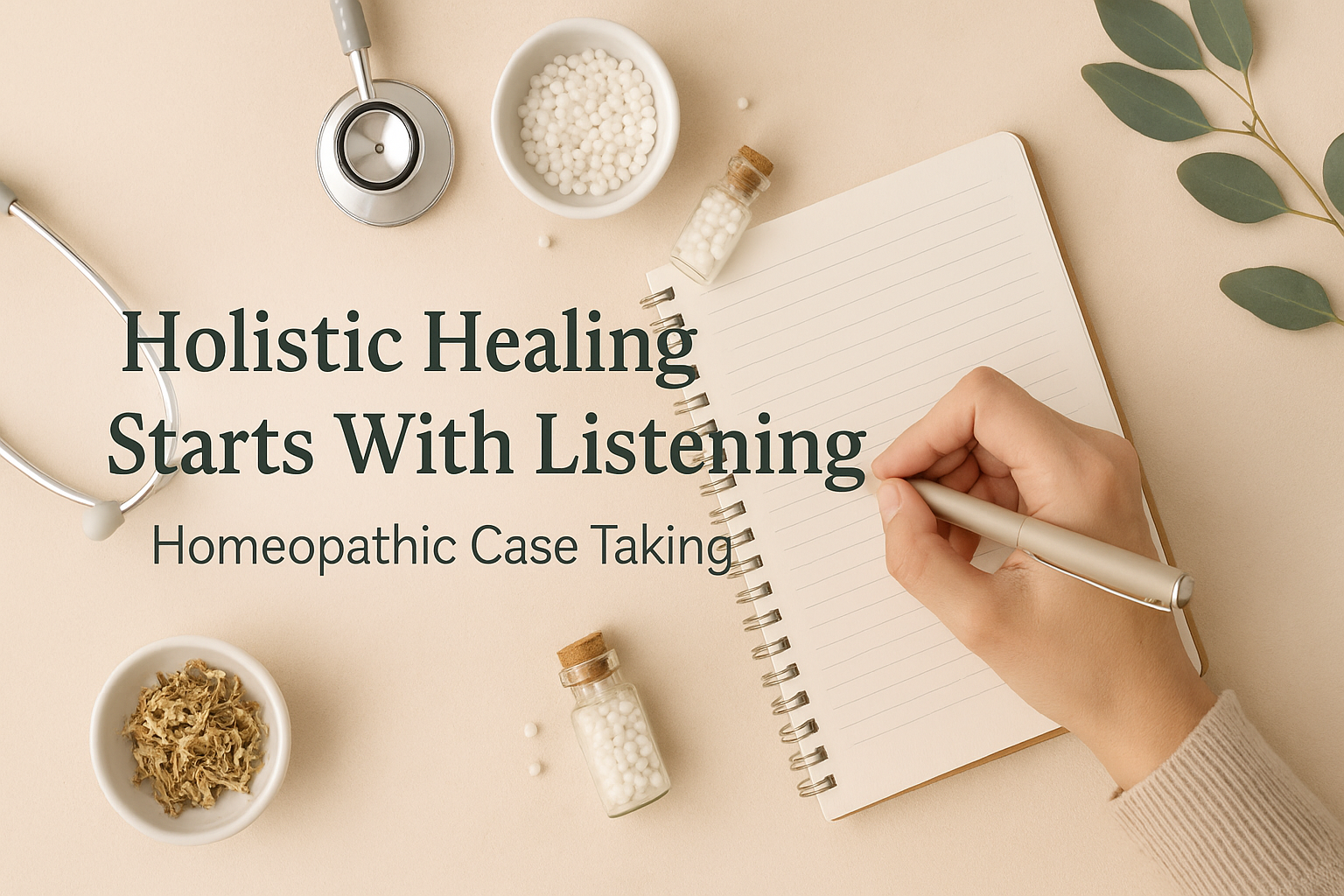
The Art of Homeopathic Case-Taking
How a Deeply Personal Conversation Becomes the Foundation of Individualized Healing
When you sit down with a homeopath for the first time, you may notice something different right away: the consultation feels less like a checklist and more like an honest conversation. This process — known as case taking — is the foundation of homeopathic treatment. It is the practitioner's way of understanding not just your diagnosis, but you: your symptoms, your emotions, your habits, and the way illness shows up uniquely in your life. This article explores what homeopathic case taking really involves, why it matters, and how it works alongside lifestyle and mindset to support genuine, individualized healing.
What Makes Case Taking Different
Conventional medicine often groups patients by diagnosis and treats the disease according to standard protocols — an approach that has saved countless lives and remains essential, especially in emergencies and acute illness. Homeopathy works from a complementary perspective: it holds that no two people experience the same condition in exactly the same way.
A homeopath therefore asks open-ended questions about your physical complaints, but also about your sleep, appetite, temperature preferences, stress responses, fears, and even your dreams. This is not idle curiosity. According to classical homeopathic theory, these personal details — known as 'individualizing symptoms' — guide the selection of a remedy that matches your whole pattern of illness, not just its label.
The Two Principles Behind the Process
• The Law of Similars: A substance that can produce certain symptoms in a healthy person, when prepared homeopathically and given in minimal doses, is believed to stimulate the body's own healing response toward similar symptoms.
• Individualization: Since no two patients are identical, treatment is matched to the total picture of the person — physical, emotional, and lifestyle factors combined — rather than to the disease name alone.
How a Case-Taking Session Usually Unfolds
Most homeopathic consultations move through a few natural stages:
• Building rapport: The practitioner creates a relaxed setting and gathers your medical history, daily routine, diet, and the main concern that brought you in.
• Exploring each symptom in detail: When did it start? What makes it better or worse? Is it worse at a particular time of day, in certain weather, or under stress?
• Understanding your emotional landscape: Common fears, anxiety patterns, irritability, or grief are explored gently, since mental and emotional states often mirror physical imbalance.
• Looking at constitutional traits: Appetite, thirst, cravings, energy levels, and whether you tend to feel too hot or too cold all help complete the picture.
From this rich information, the practitioner studies the 'totality of symptoms' against established homeopathic references — the materia medica and repertory — to select the remedy that best matches your unique presentation.
A Common Patient Question: 'Why So Many Personal Questions?'
Many people are pleasantly surprised, and sometimes a little nervous, when asked about their emotional life during a homeopathic visit. It helps to remember that this is standard practice, not an intrusion. The more honestly and completely you describe your experience, the more precisely a remedy can be matched to you. Practitioners are trained to hold this information with care and confidentiality, and a good case-taking session should always leave you feeling heard rather than exposed.
Classical Homeopathy: Commonly Indicated Remedies for Pre-Consultation Anxiety
It is natural to feel some nervousness before opening up about personal symptoms, sleep, or emotional struggles. In classical homeopathy, remedy choice always depends on the individual's complete picture rather than a single symptom, and a qualified homeopath should be consulted for proper prescription. The following remedies are commonly considered for anxiety or nervousness around consultations and self-disclosure, along with their keynote features:
• Gelsemium — Anticipatory anxiety with trembling, weakness, and a dread of being examined or questioned.
• Argentum Nitricum — Nervous anticipation, hurried speech, and fear of being judged while explaining oneself.
• Lycopodium — Outward confidence masking inner self-doubt, with anxiety about performance or being 'found out.'
• Ignatia Amara — Sensitive individuals who internalize emotion, sigh frequently, and find it hard to express grief or hurt in words.
• Natrum Muriaticum — A guarded, reserved nature with a tendency to suppress feelings and avoid emotional discussion.
• Pulsatilla — Emotional, tearful, and seeking reassurance; symptoms shift easily and improve with comforting attention.
• Aconitum Napellus — Sudden, intense fear or panic, often with restlessness before an appointment or procedure.
• Silicea — Quiet, reserved individuals who feel anxious about exposing personal weaknesses or 'losing face.'
Lifestyle Modification: Supporting the Healing Process
Whatever path of treatment you choose, simple lifestyle habits strengthen the body's own ability to heal:
• Diet: Favor whole, minimally processed foods, plenty of vegetables and fruit, and adequate hydration. Reduce excess caffeine and sugar, which can heighten anxiety and disturb sleep.
• Sleep: Aim for consistent sleep and wake times, and limit screens for at least thirty minutes before bed to support deeper rest.
• Exercise: Regular movement — even a daily walk — helps regulate stress hormones and improves mood and resilience.
• Stress management: Practices such as deep breathing, journaling, or short periods of quiet reflection can reduce the physical tension that often accompanies anxiety.
• Healthy habits: Reducing tobacco, alcohol, and excessive screen time supports both physical and emotional balance over time.
Mind | Body | Deen
True wellbeing touches every part of who we are — mind, body, and spirit. Opening up about one's struggles, fears, and history, as case taking requires, can itself be an act of self-honesty that brings emotional relief even before any remedy is taken.
From an Islamic perspective, seeking treatment is encouraged alongside trust in Allah's plan. The Prophet Muhammad (peace be upon him) said, 'Make use of medical treatment, for Allah has not created a disease without appointing a remedy for it, except for one disease — old age.' (Sunan Abu Dawood). This teaching reminds us that seeking help — whether through honest conversation with a practitioner, lifestyle change, or medicine — is part of faith, not separate from it.
The Quran also offers comfort to anyone feeling burdened or anxious: 'And whoever relies upon Allah — then He is sufficient for him. Indeed, Allah will accomplish His purpose.' (Surah At-Talaq, 65:3). Approaching a consultation with this sense of trust can ease the natural hesitation many feel about sharing personal details, allowing the healing conversation to unfold more freely.
A Collaborative Path Forward
Homeopathic case taking is, at its heart, a partnership. The more openly a patient shares their physical, emotional, and lifestyle picture, the more precisely a homeopath can tailor care to that individual. This personalized approach does not replace conventional medical care — particularly for emergencies or conditions requiring urgent intervention — but can work alongside it as part of a broader, holistic approach to wellbeing.
If you are considering homeopathic treatment, come prepared to talk openly, and trust that the questions asked, however personal, exist to help find the remedy that fits you best.
Dr. Benojir
Classical Homeopath & Islamic Life Coach
Mind | Body | Deen
“We Treat; Allah Heals”