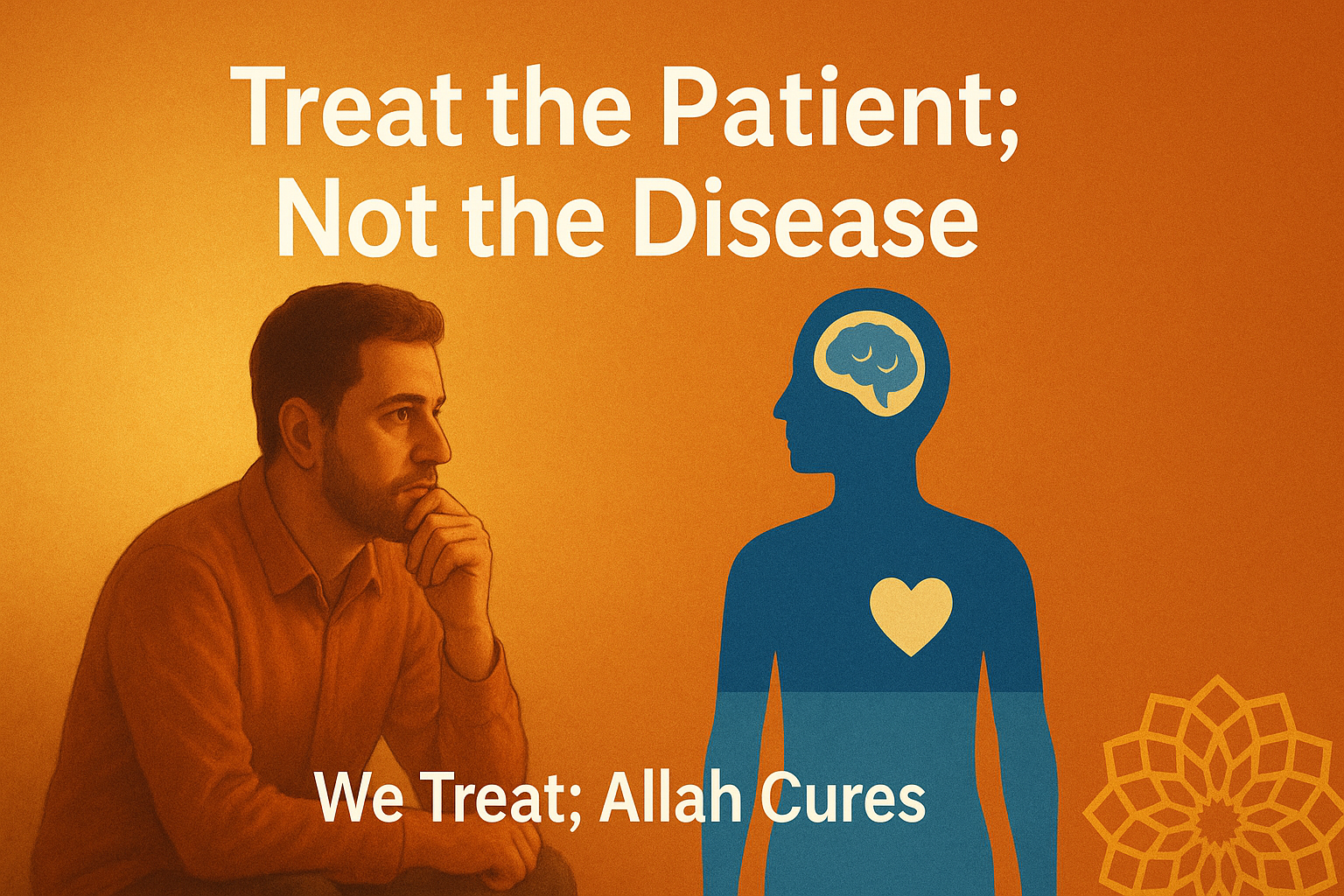
Why Personalized, Whole-Person Healing Outlasts a One-Size-Fits-All Prescription
Two people can walk into a clinic with the exact same diagnosis — migraine, asthma, gastritis, infertility — and yet be living through completely different inner worlds. One is exhausted by months of unresolved grief. Another is quietly furious and has never said so out loud. A third is gripped by chronic stress, and a fourth has carried unspoken fear since childhood. The disease may wear the same name on a chart, but the human being underneath it is never the same twice.
This single insight — that illness is personal, not generic — sits at the heart of classical homeopathy, of Hippocratic medicine, and increasingly of modern person-centered care. It is also a gentle, practical idea that any patient can use today to get more out of their own healthcare, whichever system they choose.
The Person Behind the Diagnosis
Modern medicine has become remarkably precise at naming what is wrong: a blood test, a scan, a biopsy. This precision has saved countless lives. But a diagnosis describes a pattern of disease — it does not describe the person carrying it. Two people with identical thyroid lab results may have arrived there through entirely different routes: one through years of suppressed anxiety, another through poor sleep and an erratic diet, a third through grief that was never processed.
This is why classical homeopathy places so much emphasis on what is called the totality of symptoms — not just the physical complaint, but a person's emotional patterns, fears, temperament, sleep, dreams, and the specific triggers that worsen or relieve their suffering. Two patients, one diagnosis, two completely different treatment pictures.
Why Treating the Label Alone Falls Short
When care focuses only on the name of the disease, treatment can quietly turn into a mechanical exchange: pain calls for a painkiller, gastric discomfort calls for an antacid, an allergy calls for an antihistamine. None of this is wrong — these tools genuinely relieve suffering and are sometimes essential, even lifesaving. But symptom relief and root-cause healing are two different goals, and confusing them is a common source of frustration for patients who feel like they are "managing" a condition rather than truly recovering from it.
A more complete approach asks a further question after the symptom is addressed: why did this imbalance appear in this person, at this time, in this way? Answering that question — through listening, history-taking, and attention to lifestyle and emotional life — is where lasting change tends to begin.
What the Research Says About Whole-Person Care
This is not just philosophy; it is increasingly supported by data. Globally, noncommunicable chronic diseases such as heart disease, diabetes, cancer, and chronic respiratory illness now account for the majority of deaths worldwide, and a large share of that burden traces back to a small number of modifiable factors — tobacco use, poor diet, physical inactivity, excess alcohol, and chronic stress (World Health Organization).
In the United States, more than 70 percent of all deaths and roughly three-quarters of healthcare spending are linked to chronic disease (Centers for Disease Control and Prevention). Encouragingly, research published in the United Nations Chronicle found that combining just four healthy habits — maintaining a healthy weight, exercising regularly, eating well, and not smoking — was associated with as much as an 80 percent reduction in risk of developing the most common chronic diseases.
These findings echo a clinical model called biopsychosocial medicine, first proposed by Dr. George Engel in 1977, which argues that biology, psychology, and social circumstances are inseparable threads in any illness. It is the same thread that classical homeopathy was weaving two centuries earlier when it asked physicians to treat "the sick person," not merely "the sickness."
Classical Homeopathy: Honoring the Individual
Samuel Hahnemann, the founder of homeopathy, taught that the remedy must match the whole person — their temperament, emotional tendencies, physical constitution, and the precise way their symptoms behave — rather than simply matching a diagnosis. This is why two patients with the same condition may, quite correctly, be given two different homeopathic remedies.
Below are some commonly indicated remedies in classical homeopathic practice, along with a few of their keynote (most characteristic) symptoms. These are shared purely for educational understanding of how individualization works in practice; they are not a substitute for a one-to-one consultation, since correct remedy selection always depends on the totality of a person's unique picture.
• Ignatia amara — Suited to grief, sudden emotional shock, or silent sorrow; sighing, a lump-in-the-throat sensation, and symptoms that seem contradictory to outside observers.
• Natrum muriaticum — For those who withdraw and grieve privately, avoid consolation, and carry old emotional wounds; often linked with headaches and skin troubles aggravated by sun or salt.
• Nux vomica — The overworked, irritable, perfectionistic person under chronic stress; digestive upset, sleep disturbed by mental overactivity, sensitivity to stimulants.
• Arsenicum album — Marked by anxiety about health and security, restlessness, a need for order and control, and a tendency toward exhaustion despite restlessness.
• Lycopodium — Outward confidence masking inner self-doubt, digestive bloating worse in the late afternoon, and a dread of new responsibilities.
• Pulsatilla — A gentle, changeable, emotionally expressive temperament, craving comfort and sympathy, with symptoms that shift easily with mood and weather.
• Gelsemium — Anticipatory anxiety, such as before an exam or major event, accompanied by heaviness, trembling, and a dull, drained feeling.
• Sepia — Emotional and physical fatigue, particularly in those juggling many responsibilities, with indifference to loved ones during low phases and relief from vigorous activity.
A qualified classical homeopath will take a detailed case history before recommending any remedy, since potency, frequency, and remedy choice all depend on the individual.
Lifestyle Modification: The Quiet Foundation of Healing
No remedy, prescription, or procedure works in isolation from the life it is asked to support. Lifestyle is sometimes called "silent medicine" because its effects build gradually but powerfully over time.
• Diet — Favor whole, minimally processed foods, adequate hydration, and regular meal timing; reduce excess sugar, fried food, and late-night eating.
• Sleep — Aim for consistent sleep and wake times; poor sleep is now recognized as a major driver of chronic disease risk.
• Movement — Regular, moderate physical activity — walking, stretching, or any enjoyable movement — supports both mood and metabolic health.
• Stress management — Simple daily practices such as deep breathing, prayer, journaling, or time in nature measurably lower stress hormones.
• Habits — Reducing tobacco, excess caffeine, and alcohol, and building small, sustainable routines rather than drastic short-term changes.
None of these replace medical or homeopathic treatment, but together they create the internal environment in which any treatment is more likely to succeed.
Mind | Body | Deen: An Integrated View of Healing
For many patients, healing is incomplete if it ignores the spiritual dimension of life. Islamic tradition has long held that the body, mind, and soul are deeply connected, and that illness can carry both a physical and a spiritual lesson.
The Qur'an reminds believers that ease often follows hardship: "So, surely with hardship comes ease. Surely with hardship comes ease" (Surah Ash-Sharh, 94:5–6). This offers a gentle psychological anchor for patients facing chronic or long-term illness — a reminder that the current struggle is not the whole story.
The Prophet Muhammad (peace be upon him) is reported to have said that there is no illness that Allah has sent down except that He has also sent down a cure for it, encouraging believers to seek treatment while trusting in Allah's mercy (recorded in Sahih al-Bukhari). This single teaching forms the basis of a balanced approach: patients are encouraged to actively pursue medical or homeopathic care — not to wait passively — while placing their trust in Allah for the outcome.
Practically, this can look like calm, regular prayer as a stress-reduction practice, gratitude journaling rooted in dhikr (remembrance of Allah), and community support through family or congregation — all of which have measurable benefits for emotional resilience during illness.
Common Questions Patients Ask
"If two people have the same disease, why might they get different remedies or advice?" Because the disease label describes the pattern, not the person. Individual triggers, temperament, and history shape what actually helps each person heal.
"Does choosing a holistic, individualized approach mean rejecting conventional diagnosis?" Not at all. Accurate diagnosis remains essential. Individualized, whole-person care works alongside diagnosis — it asks a further question about the person living with that diagnosis.
"How long does whole-person healing usually take?" It varies widely depending on the condition, its duration, and how consistently lifestyle and treatment recommendations are followed. Chronic, long-standing patterns generally take longer to shift than recent, acute ones.
Final Thoughts
Treating the patient rather than the disease is not a rejection of any single system of medicine — it is a commitment to looking past the label and seeing the whole person who carries it: their body, their emotions, their lifestyle, and, for many, their faith. When all of these are honored together, healing tends to be deeper, gentler, and more lasting.
Dr. Benojir
Classical Homeopath & Islamic Life Coach
Mind | Body | Deen
“We Treat; Allah Heals”
References
World Health Organization. Noncommunicable diseases (fact sheet), 2025.
Centers for Disease Control and Prevention. Trends in Multiple Chronic Conditions Among US Adults, Preventing Chronic Disease, 2013–2025.
United Nations Chronicle. Lifestyle Diseases: An Economic Burden on the Health Services.
Engel, G.L. The Need for a New Medical Model: A Challenge for Biomedicine. Science, 1977.
The Qur'an, Surah Ash-Sharh (94:5–6).
Sahih al-Bukhari, on the existence of a cure for every illness.