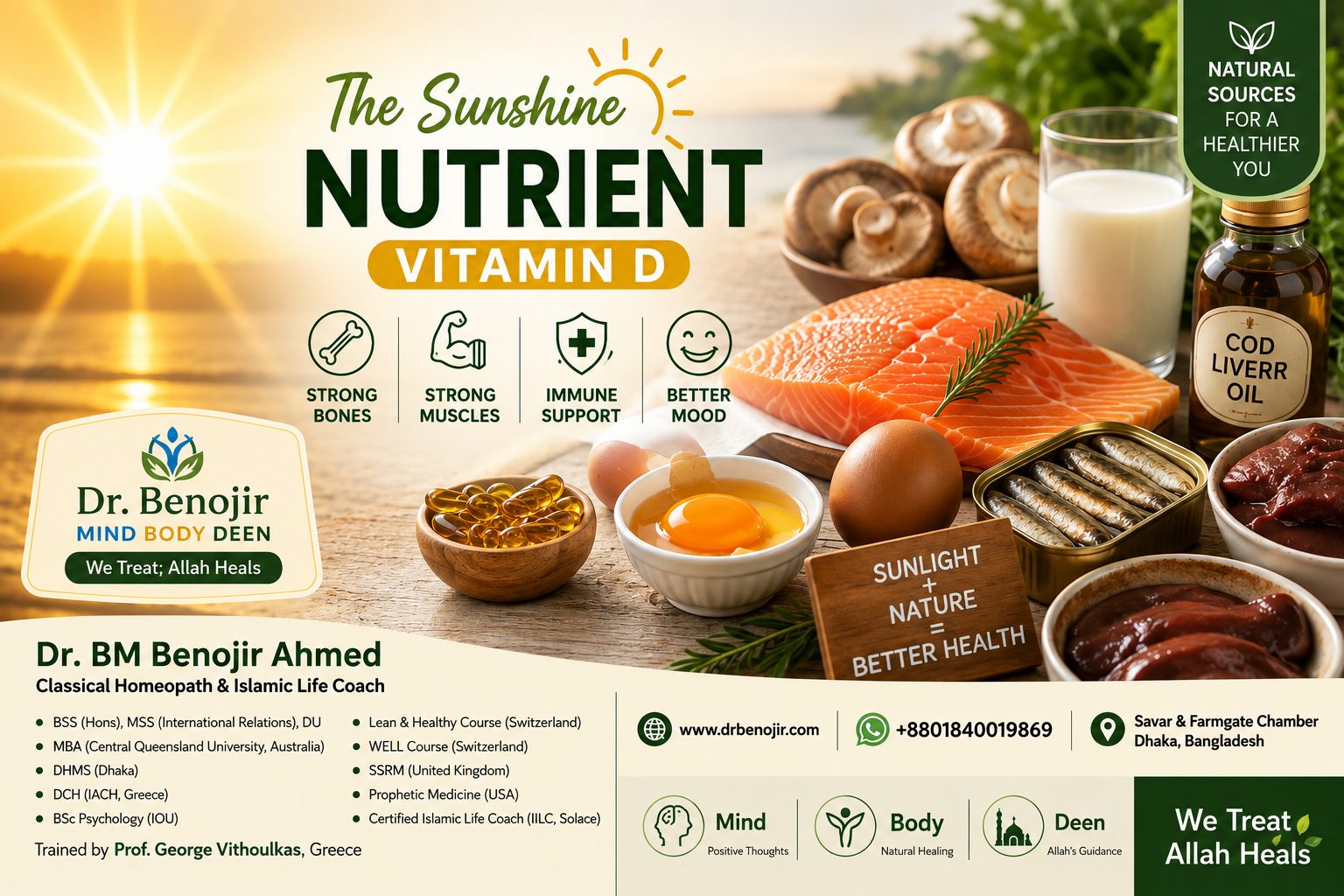
Vitamin D: The Sunshine Nutrient
Why your body depends on it, how to get enough naturally, and where supplements fit in
What Is Vitamin D?
Vitamin D is a fat-soluble vitamin that behaves more like a hormone than a typical nutrient. Unlike most vitamins, which the body can only get from food, vitamin D can also be manufactured by the skin when it is exposed to sunlight. Once produced or consumed, it travels to the liver and then the kidneys, where it is converted into its active form, calcitriol, which regulates how the body absorbs and uses calcium and phosphate.
There are two main dietary forms: vitamin D2 (ergocalciferol), found in some plant and fungal sources, and vitamin D3 (cholecalciferol), made by the skin and found in animal-based foods. According to Stat Pearls (NCBI), vitamin D3 is more effective than D2 at raising and maintaining blood levels of the vitamin, which is why it is generally the preferred form in supplements.
Why the Human Body Needs Vitamin D
The NIH Office of Dietary Supplements describes vitamin D as essential for the body to absorb calcium, one of the main building blocks of bone; without enough vitamin D, bones can become thin, brittle, or misshapen.
Beyond bone health, vitamin D receptors are found in nearly every tissue in the body, which is why researchers have linked the vitamin to a wide range of functions:
• Calcium and phosphate absorption in the gut, essential for bone mineralization.
• Muscle function and strength, particularly relevant for balance and fall prevention in older adults.
• Immune system regulation, helping the body respond appropriately to infection and inflammation.
• Cell growth and communication, including processes studied in relation to cardiovascular and metabolic health.
• Mood and neurological function, an area of active but still-developing research
Key Benefits of Adequate Vitamin D
Stronger bones: supports calcium absorption and bone mineralization, reducing the risk of fractures.
Healthy muscles: adequate levels are associated with better muscle strength and reduced fall risk in older adults.
Immune support: plays a regulatory role in both innate and adaptive immune responses.
Dental health: contributes to the mineralization process that keeps teeth strong.
Possible long-term protective associations: population studies have explored links between adequate vitamin D and reduced risk of certain chronic conditions, though the Mayo Clinic and other sources note that evidence for many of these non-bone benefits is still developing and not yet conclusive.
What Happens When You're Deficient?
Vitamin D deficiency is common. The NIH health professional fact sheet notes that deficiency is especially prevalent among people who are lactose intolerant, have a milk allergy, or follow a vegan or strict vegetarian diet.
According to Stat Pearls, deficiency is generally defined as a blood level of 25-hydroxyvitamin D below 20 ng/mL, with 20–30 ng/mL considered insufficient and levels above 30 ng/mL considered adequate; deficiency can lead to rickets in children and osteomalacia or osteoporosis in adults.
Signs and consequences of ongoing deficiency include:
• Bone pain, tenderness, and increased fracture risk.
• Muscle weakness, aches, and cramping.
• Fatigue and low energy that doesn't improve with rest.
• Rickets in children — soft, weak bones that can cause bowed legs and delayed growth.
• Osteomalacia and osteoporosis in adults — softened or thinning bones prone to fracture.
• Increased susceptibility to infections due to impaired immune regulation.
• Low mood, which some studies associate with low vitamin D, though the relationship is not fully established.
People at particular risk of deficiency include older adults, people with darker skin (which produces vitamin D less efficiently from sunlight), people who spend most of their time indoors, those who consistently cover their skin, people with obesity, and those with malabsorption conditions such as celiac or Crohn's disease.
Natural Food Sources of Vitamin D
Very few foods naturally contain significant amounts of vitamin D, which is part of why deficiency is so widespread. The main natural sources include:
Fatty fish: salmon, mackerel, sardines, and tuna are among the richest natural sources
Cod liver oil: one of the most concentrated natural sources available
Egg yolks: a modest but accessible source, especially from pasture-raised hens
Beef liver: contains meaningful amounts, though it's not a daily staple for most people
Mushrooms exposed to UV light: some varieties naturally produce vitamin D2 when grown under or exposed to ultraviolet light
Because natural food sources are limited, many countries fortify common foods with vitamin D, including cow's milk and plant-based milk alternatives, breakfast cereals, orange juice, and some yogurts. Checking nutrition labels is the easiest way to identify fortified products.
How Sunlight Helps — and How Far It Goes
Sunlight is the most efficient natural trigger for vitamin D production. When ultraviolet B (UVB) rays strike the skin, they convert a cholesterol compound in skin cells into vitamin D3, which is then processed by the liver and kidneys into its usable form. This is why vitamin D is often nicknamed the “sunshine vitamin.”
Several factors determine how much vitamin D your skin actually produces from sun exposure:
Time of day: UVB rays are strongest when the sun is high, generally late morning to mid-afternoon.
Season and latitude: people living far from the equator get little to no UVB exposure during winter months.
Skin tone: melanin reduces UVB absorption, so people with darker skin need considerably longer sun exposure to produce the same amount of vitamin D as someone with lighter skin.
Amount of skin exposed: exposing arms and legs produces more vitamin D than exposing the face and hands alone.
Sunscreen and clothing: both block UVB rays and reduce vitamin D synthesis, though dermatologists generally still recommend sunscreen to prevent skin damage and skin cancer.
Age: skin becomes less efficient at producing vitamin D as people get older.
Air pollution and window glass: both filter out UVB rays, so sunlight through a window does not produce vitamin D.
Is Sunlight Alone Enough?
For many people, brief, regular sun exposure — roughly 10 to 30 minutes on the arms and legs a few times a week, depending on skin tone and location — can meaningfully contribute to vitamin D levels. But sunlight alone is often not a reliable year-round source for several practical reasons:
• People who live at higher latitudes get little to no UVB exposure for several months of the year.
• Most working adults spend the bulk of daylight hours indoors.
• Sun-safety guidance to limit unprotected exposure directly competes with the exposure needed for vitamin D synthesis.
• Older adults and people with darker skin tones synthesize vitamin D far less efficiently and often cannot reach adequate levels from sunlight alone.
Because of these limitations, StatPearls recommends that most adults under 65 who don't get consistent, adequate sun exposure year-round consume 400 to 800 IU of vitamin D3 daily through diet or supplements, rising to 800–1,000 IU daily for adults 65 and older.
In practice, this means sunlight, diet, and (where needed) supplementation usually work together, rather than sunlight being a complete solution on its own — particularly for people in northern climates, indoor workers, older adults, and people with darker skin.
Although sunlight is the primary natural source of vitamin D in a sunny country like Bangladesh, many people still cannot obtain adequate vitamin D from sunlight alone because of urban lifestyles, spending most of the day indoors, air pollution, clothing, skin pigmentation, and sunscreen use. Therefore, when necessary, vitamin D-rich foods, blood testing, and supplementation under a healthcare provider's guidance may also be required.
The Risks of Synthetic (Supplement) Sources
Vitamin D supplements are a safe and effective way to correct or prevent deficiency when used appropriately and are generally recommended over unsupervised sunbathing, since excessive UV exposure raises skin cancer risk without added vitamin D benefit past a certain point. That said, synthetic sources carry a real risk that natural sun exposure does not: overdose.
The Cleveland Clinic notes that excessive sun exposure does not cause vitamin D toxicity — the body regulates how much it produces from sunlight — but taking too much supplemental or prescription vitamin D can lead to toxic buildup, since the vitamin is fat-soluble and stored in the body rather than excreted.
According to the Merck Manual, taking very high daily doses — roughly 60 to 100 times the recommended dietary allowance — over several months can cause toxicity and dangerously high blood calcium levels, known as hypercalcemia.
Symptoms of vitamin D toxicity, which stem mainly from hypercalcemia, include:
• Nausea, vomiting, and loss of appetite
• Constipation and dehydration
• Excessive thirst and frequent urination
• Confusion, fatigue, and muscle weakness
• In severe or prolonged cases, kidney stones or kidney damage
Case reports, including one published in Medicine (2024), describe serious outcomes such as delirium and severe electrolyte imbalance in older adults who over-supplemented with liquid vitamin D3, underscoring the importance of following recommended doses and periodic blood testing rather than self-prescribing high doses.
Practical safety guidance:
• Don't exceed the recommended daily allowance without medical supervision — most healthy adults do not need more than 600–800 IU/day unless a doctor has diagnosed a deficiency.
• Get a blood test before starting high-dose supplementation, and periodically while on it, especially at doses above 2,000 IU/day.
• Be cautious with combination supplements — multivitamins, calcium supplements, and fortified foods can add up without you realizing it.
• Choose reputable, third-party-tested supplement brands, since dosing accuracy varies across products.
• Talk to a doctor before supplementing if you have kidney disease, sarcoidosis, or other conditions that affect calcium regulation.
Lifestyle Habits That Support Healthy Vitamin D Levels
• Get short, regular sun exposure on bare skin when possible, balanced with sun-safety practices for longer outdoor time.
• Include vitamin D-rich or fortified foods in your weekly meals — fatty fish, eggs, fortified milk or plant milk.
• Maintain a healthy body weight, since vitamin D is fat-soluble and can be sequestered in excess body fat, lowering blood levels.
• Support absorption with a source of healthy fat at the same meal, since vitamin D is better absorbed alongside dietary fat.
• Stay active outdoors where possible — walking, gardening, or outdoor exercise combines movement with sun exposure.
• Get tested periodically if you're in a high-risk group — older adults, people with darker skin, indoor workers, or those with limited diets.
• Discuss supplementation with a healthcare provider rather than self-dosing, particularly for infants, pregnant women, and older adults.
Conclusion
Vitamin D sits at an unusual crossroads of nutrition and sunlight, which makes it easy to either overlook or over-supplement. The safest, most sustainable approach combines sensible sun exposure, a diet that includes natural or fortified vitamin D sources, and supplementation only when guided by blood testing and medical advice. Treated this way, vitamin D can do what it does best — quietly support strong bones, a resilient immune system, and steady long-term health — without tipping into the risks that come from either too little sunlight or too much synthetic supplementation.
References
1. National Institutes of Health, Office of Dietary Supplements. “Vitamin D — Health Professional Fact Sheet.” ods.od.nih.gov/factsheets/VitaminD-HealthProfessional
2. Kaur, J., Khare, S., Givler, A. “Vitamin D Deficiency.” StatPearls, NCBI Bookshelf, updated Feb 2025. ncbi.nlm.nih.gov/books/NBK532266
3. Mayo Clinic. “Vitamin D.” and “Vitamin D deficiency.” mayoclinic.org
4. Cleveland Clinic. “Vitamin D Deficiency: Causes, Symptoms & Treatment” and “Vitamin D Toxicity.” my.clevelandclinic.org
5. Merck Manual (Consumer Version). “Vitamin D Excess.” merckmanuals.com/home/disorders-of-nutrition/vitamins/vitamin-d-excess
6. Marcinowska-Suchowierska, E. et al. “Vitamin D Toxicity – A Clinical Perspective.” Frontiers in Endocrinology, 2018. PMC6158375
7. Case report. “Over-supplement of vitamin D may cause delirium, abdominal distension, and muscle weakness in the elderly.” Medicine, 2024. PMC11688089
Dr. Benojir
Trained By Prof. George Vithoulkas | Classical Homeopath & Islamic Life Coach
Mind | Body | Deen
“We Treat; Allah Heals”