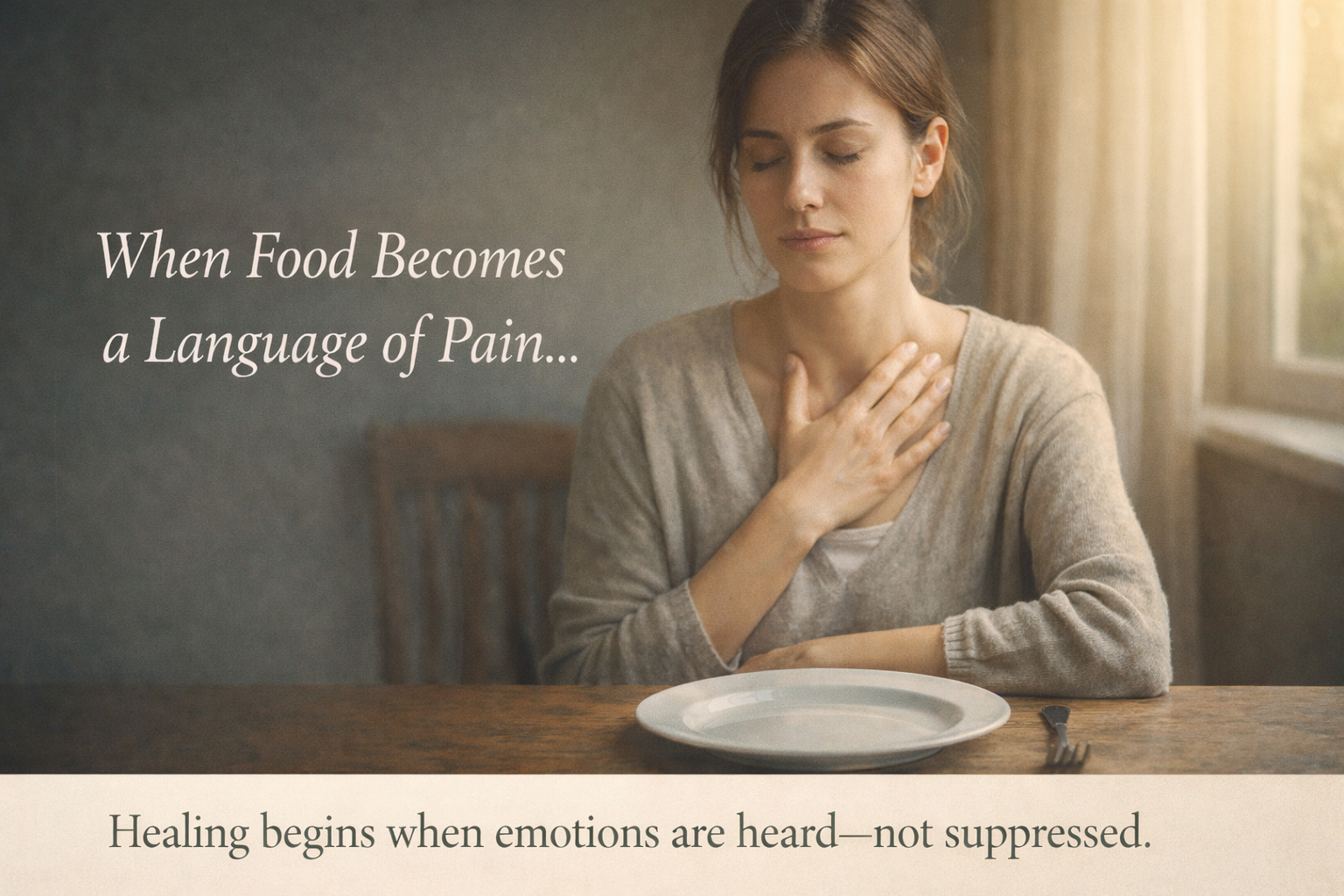
Understanding Eating Disorders: Causes, Care, and Healing for Mind, Body & Soul
Most people assume eating disorders are about food, weight, or willpower. In reality, they are complex mental health conditions where eating behavior becomes the visible symptom of deeper emotional pain. Understanding this distinction is often the first step toward compassionate, effective care.
This guide explores eating disorders from a balanced perspective — combining modern medical understanding, individualized classical homeopathy, and the emotional-spiritual dimension of healing, so families and patients can make informed, hopeful decisions.
What Are Eating Disorders?
Eating disorders are recognized psychiatric conditions that affect a person’s relationship with food, body image, and self-worth. They are not a phase, a diet gone wrong, or a matter of choice. The most common types include:
• Anorexia nervosa — intense fear of weight gain, restrictive eating, and a distorted body image
• Bulimia nervosa — cycles of binge eating followed by compensatory behaviors, often hidden behind a seemingly normal routine
• Binge eating disorder — recurrent episodes of eating with a sense of loss of control, without compensatory behavior
• Avoidant/restrictive food intake disorder (ARFID) — limited eating due to sensory sensitivity or fear, without body-image concerns
Each presents differently, but all share an underlying theme: food becomes a way of managing emotions that feel otherwise unmanageable.
Common Causes and Risk Factors
Research consistently shows that eating disorders arise from multiple interacting factors rather than one single cause.
Biological factors
• Family history of eating disorders, anxiety, or depression
• Differences in brain chemistry affecting mood and appetite regulation
• Hormonal changes, particularly during adolescence
Psychological factors
• Perfectionism and a strong need for control
• Low self-esteem or a harsh inner critic
• Co-occurring anxiety, depression, or obsessive thought patterns
Social and environmental factors
• Pressure from social media and unrealistic body standards
• Difficult life transitions, grief, or chronic stress
• Family or relationship dynamics that affect emotional safety
No single factor “causes” an eating disorder — it is the combination, layered over time, that matters.
Recognizing the Signs
Early recognition improves outcomes significantly. Patients and families often ask, “How do we know if this is more than a diet phase?” Some patterns worth noticing include:
• Persistent preoccupation with food, weight, or body shape that disrupts daily life
• Secretive eating behaviors or strong anxiety around meals
• Withdrawal from social situations involving food
• Noticeable changes in energy, mood, sleep, or concentration
• Physical signs such as digestive discomfort, fatigue, or irregular menstrual cycles
If these patterns persist for several weeks, professional evaluation is recommended rather than waiting for things to resolve on their own.
Complications When Left Unaddressed
Without support, eating disorders can affect nearly every body system over time — including the heart, bones, digestive tract, and hormonal balance — alongside worsening anxiety, depression, and social isolation. This is precisely why early, compassionate intervention matters more than the severity of symptoms at any single moment.
How Modern Medicine Helps
Conventional care plays an important role, particularly for assessment, safety, and structured psychological support. A typical multidisciplinary approach may include:
• Psychotherapy, such as cognitive behavioral therapy (CBT) to address distorted thought patterns, or family-based therapy, especially for younger patients
• Nutritional counseling with a qualified dietitian, focused on rebuilding a peaceful relationship with food rather than rigid rules
• Medical monitoring to assess physical health, particularly heart rate, electrolytes, and bone health
• Medication, when appropriate, to support co-existing anxiety or depression alongside therapy
These approaches are evidence-based and often essential, particularly in moderate to severe cases.
Classical Homeopathy: Treating the Person Behind the Pattern
Classical homeopathy approaches eating disorders by looking at the whole person — their emotional history, temperament, and the unique way distress expresses itself — rather than the eating pattern in isolation. Two people with the same diagnosis may need entirely different remedies, because homeopathy treats individual susceptibility, not labels.
A classical homeopath takes a detailed case history covering emotional triggers, family patterns, sleep, energy, and personality traits before selecting a remedy. Self-prescribing is strongly discouraged; the remedies below are illustrative of homeopathic philosophy, not a self-treatment guide.
Commonly considered remedies (always individualized by a qualified homeopath):
• Ignatia Amara — for sudden emotional shock, grief, or suppressed sadness that preceded the eating disturbance
• Natrum Muriaticum — for reserved individuals who internalize pain, avoid showing vulnerability, and carry old emotional wounds
• Pulsatilla — for those who are emotionally changeable, seek reassurance, and feel better with comfort and company
• Lycopodium — for individuals who appear confident outwardly but struggle with deep self-doubt and fear of failure
• Arsenicum Album — for anxious, controlling personalities with a strong need for order and perfection
• Sepia — for emotional exhaustion, indifference, and withdrawal from family or relationships
• Staphysagria — for suppressed anger or hurt feelings, especially following conflict or humiliation
• Carcinosin — often considered for individuals with a history of high-achieving pressure and self-suppression
Many patients report that alongside emotional steadiness, they notice improvements in sleep quality, digestion, and overall resilience — supporting the body’s own healing capacity gently and safely.
Lifestyle Modifications That Support Recovery
Daily habits can meaningfully support — though never replace — professional treatment.
• Structured, unhurried meals eaten without screens, judgment, or rushing
• Consistent sleep routines, since poor sleep intensifies emotional reactivity
• Gentle movement such as walking, rather than punishing exercise routines
• Reduced exposure to social media content that fuels comparison or body anxiety
• Stress-management practices such as journaling, breathing exercises, or quiet reflection
• Honest conversations with a trusted person instead of carrying distress alone
Small, sustainable changes — not dramatic overhauls — tend to support lasting recovery.
Mind | Body | Deen: The Spiritual Dimension of Healing
From an Islamic life-coaching perspective, eating disorders often reflect a deeper disconnection — between how a person sees their body and how Allah describes it.
The Qur’an reminds us:
“And We have certainly created man in the best of stature.” (Surah At-Tin, 95:4)
This verse invites reflection on the body as a deliberate, dignified creation — not something to battle or punish.
The Prophet Muhammad ﷺ said: “Your body has a right over you.” (Sahih al-Bukhari) — a reminder that care for the body is a form of worship, not vanity, and neglect or harm toward it carries real consequences.
Healing, in this light, becomes threefold:
• Mind — replacing self-criticism with honest, compassionate self-talk
• Body — nourishing rather than controlling or punishing
• Deen — returning to gratitude (shukr) for the body as an amanah (trust), and seeking Allah’s help through patience (sabr) and prayer during difficult emotional seasons
This is not a replacement for medical or psychological treatment, but a complementary source of meaning, patience, and inner peace during recovery.
Common Questions Patients Ask
“Is this my fault?”
No. Eating disorders develop from a combination of biological, psychological, and environmental factors — never a simple matter of willpower or choice.
“Can homeopathy work alongside therapy or medical treatment?”
Yes. Many patients use classical homeopathy as a complementary support alongside conventional psychological and medical care, under the guidance of their respective practitioners.
“How long does recovery take?”
Recovery timelines vary widely depending on severity, duration, and individual circumstances. What matters most is consistent, compassionate support rather than a fixed timeline.
A Path Forward
Eating disorders are treatable. With the right combination of medical care, individualized homeopathic support, lifestyle adjustments, and spiritual grounding, lasting recovery is genuinely possible. The goal is not perfection, but peace — with food, with the body, and with oneself.
If you or someone you know is struggling, reaching out to a qualified mental health professional, physician, or homeopath is a meaningful first step. Healing rarely happens in isolation, and asking for help is itself an act of strength.
Dr. Benojir
Classical Homeopath & Islamic Life Coach
Mind | Body | Deen
“We Treat; Allah Heals”