The Science and Soul of Individualized Healing in Classical Homeopathy
Have you ever noticed that two people with the same illness can feel completely different? One person with migraine retreats to a dark room and recovers after sleep. Another cannot lie down at all. One person with diabetes is anxious and restless; another is slow, heavy, and emotionally flat. Their blood tests may look identical — but their inner experience is worlds apart.
This is not a coincidence. It is the foundation of classical homeopathy: the understanding that disease does not exist in isolation. It exists within a person — a unique individual with their own emotional patterns, physical sensitivities, life history, and inner strengths.
This article explores why individualized healing matters, how classical homeopathy approaches the whole person, and what you can do — mind, body, and soul — to support lasting wellbeing.
Your Diagnosis Is a Label — Not Your Complete Story
Modern medicine classifies illness through diagnostic labels: migraine, eczema, hypothyroidism, anxiety disorder, irritable bowel syndrome. These labels are valuable. They guide investigation, research, and standard treatment. But they cannot capture the full picture of a living, breathing, feeling human being.
Consider migraine as an example. Three patients may all receive the same diagnosis — yet their experience is entirely different:
• Patient A: Throbbing pain over the right eye, worse with noise and light, better after vomiting, accompanied by intense irritability.
• Patient B: Dull, pressing headaches triggered by emotional disappointment, prefers silence and solitude, cries quietly.
• Patient C: Migraines linked to the menstrual cycle, with hormonal irregularity, bloating, and emotional withdrawal.
Are these the same disease? By name, yes. But as human experiences — they are profoundly different.
Classical homeopathy does not treat the label. It treats the person carrying the label. This distinction is not just philosophical — it is clinically meaningful.
The Three Layers of Every Human Being
In classical homeopathy, every person is understood across three interconnected dimensions. A complete case evaluation considers all three:
1. The Mental Layer
This includes how a person thinks, remembers, concentrates, makes decisions, and relates to fear or uncertainty. Two patients with the same physical illness may be mentally opposite:
• One may be an anxious overthinker, constantly anticipating problems.
• Another may be mentally dull, foggy, and indifferent to their surroundings.
These mental patterns are not personality quirks to be dismissed — they are clinically significant signals about the state of the whole system.
2. The Emotional Layer
Grief, jealousy, suppressed anger, loneliness, hypersensitivity — emotional patterns directly influence physical health. Research in psychoneuroimmunology now confirms what homeopathy has understood for over 200 years: emotional states alter immune function, hormonal balance, and inflammatory pathways.
• One patient may become silent and withdrawn after emotional pain.
• Another may become explosive, reactive, and confrontational.
The same wound — but expressed completely differently.
3. The Physical Layer
Appetite, digestion, sleep patterns, temperature sensitivity, skin, circulation, menstrual health — these physical details form the third layer. And even here, individuality is evident:
• Two patients with acid reflux may differ completely: one is worse after coffee and stress; another bloats after small meals regardless of what they eat.
• Two patients with insomnia: one wakes at 3 AM with racing thoughts; another sleeps heavily but never feels refreshed.
Classical homeopathy studies how these three layers interact — and selects treatment based on the totality: the complete, unique picture of that individual.
The Vital Force: Your Body's Inner Intelligence
At the heart of homeopathic philosophy is the concept of the Vital Force — an intelligent, self-regulating system that maintains balance in the body. Modern science recognizes analogous concepts: homeostasis, the autonomic nervous system, the innate immune response, the gut-brain axis.
When the Vital Force is balanced, the body adapts well to stress, illness, and change. When it is disturbed — by chronic stress, trauma, suppression, poor lifestyle, or unresolved emotional pain — symptoms appear.
Importantly, symptoms are not the enemy. They are the language of the body. A high fever signals immune mobilization. A skin eruption may reflect internal inflammation being pushed outward. Anxiety may signal a nervous system under chronic overload.
Suppressing symptoms without understanding the underlying disturbance may offer short-term relief — but can push the imbalance deeper. Classical homeopathy aims to gently restore the intelligence of the Vital Force, allowing the body to heal itself from within.
Classical Homeopathy: Individualized Treatment in Practice
A classical homeopathic consultation is nothing like a standard 10-minute appointment. The homeopath takes a detailed case history — often 60 to 90 minutes for a first consultation — exploring:
• The complete symptom picture across mental, emotional, and physical levels
• What makes symptoms better or worse (temperature, time, position, emotions, food)
• Personal and family medical history
• Life events, stressors, and significant losses
• Sleep, appetite, energy, digestion, and general sensitivity
From this full picture, a single remedy is selected — the one most closely matching the totality of the individual's symptoms. This is called the simillimum: the remedy most similar to the person's state.
The process is both an art and a science. It requires clinical training, careful observation, and honest communication between patient and practitioner.
Commonly Indicated Homeopathic Remedies
The following remedies are among the most widely used in classical homeopathy. They are presented for educational purposes only. Correct prescribing always requires full individual case-taking by a trained practitioner.
1. Nux Vomica — The Driven, Overstretched Type
• Highly competitive, ambitious, easily irritable
• Digestive complaints from overwork, coffee, alcohol, or rich food
• Wakes at 3–4 AM with an overactive mind
• Better after warm drinks, worse in cold and morning
• Common in workaholics, executives, and perfectionists
2. Natrum Muriaticum — The Closed-Off Griever
• Deep sensitivity masked by emotional restraint
• Headaches from grief, sun exposure, or suppressed tears
• Craves salt intensely; strongly averse to consolation
• Worse at 10–11 AM; improved by open air
• Often indicated after prolonged grief, heartbreak, or disappointment
3. Arsenicum Album — The Anxious Perfectionist
• Intense anxiety about health, security, and orderliness
• Burning pains paradoxically relieved by warmth
• Restless, especially between midnight and 2 AM
• Fear of being alone; needs reassurance
• Useful in anxiety disorders, asthma, IBS, and immune weakness
4. Lycopodium Clavatum — The Confident Exterior, Insecure Interior
• Bloating and fullness after small meals, worse 4–8 PM
• Low self-confidence despite an outwardly dominant personality
• Craves sweets and warm drinks
• Liver and digestive complaints common
• Often indicated in digestive disorders, hair loss, and hormonal issues
5. Sepia — The Exhausted, Emotionally Detached Type
• Profound fatigue, emotional indifference toward loved ones
• Hormonal imbalances: irregular or painful periods, menopausal symptoms
• Irritable before menses; better with vigorous exercise
• Aversion to consolation; desires solitude
• Commonly indicated in women with burnout, PCOS, or postnatal depression
6. Pulsatilla — The Gentle, Emotionally Dependent Type
• Changeable symptoms that shift location and character
• Deeply emotional, weepy, craves affection and comfort
• Better in open air; worse in warm, stuffy rooms
• Thirstless despite heat; digestive complaints from rich or fatty food
• Often indicated in children, gentle adults, and hormonal conditions
7. Phosphorus — The Bright, Sensitive, Impressionable Type
• Highly empathetic, socially magnetic, but easily overwhelmed
• Craves cold drinks; burning sensations in chest or stomach
• Fears the dark, thunderstorms, and being alone
• Quick to bleed; respiratory and circulatory sensitivity
• Often indicated in anxiety, respiratory illness, and chronic fatigue
8. Sulphur — The Philosophical, Self-Absorbed Type
• Skin conditions: itching, burning, worse from warmth and washing
• Intellectual and opinionated; tends to theorize
• Craves spicy food and alcohol; aversion to bathing
• Hot person; soles of feet burn at night
• Useful in chronic skin disorders, digestive issues, and detoxification
9. Calcarea Carbonica — The Steady, Overwhelmed Type
• Slow metabolism; tendency to weight gain, fatigue, and cold sensitivity
• Anxious about health, finances, and security
• Sweats on the head during sleep; craves eggs and sweets
• Often indicated in children with slow development or adults with chronic fatigue
• Strong fear of losing mental control or going insane
10. Ignatia Amara — The Acute Grief Remedy
• Intense, rapidly changing emotional states after shock or grief
• Sighing, sobbing, and emotional contradictions
• A sensation of a lump in the throat
• Worse from consolation; better when distracted
• Often the first remedy considered after sudden loss or emotional trauma
Understanding the Healing Process
Patients often ask: 'Why did my old symptoms come back?' or 'Why do I feel emotional after starting the remedy?'
In classical homeopathy, healing is understood as a dynamic, layered process. True healing frequently moves from the inside outward — from more vital to less vital organ systems, and from more recent to older complaints. This is sometimes called Hering's Law of Cure.
Temporary changes during treatment may include:
• Brief reappearance of old symptoms that had been suppressed
• Mild emotional release — tears, irritability, or vivid dreams
• Skin eruptions or discharge as the body processes deeper imbalance
• Slight aggravation before improvement (less common in careful prescribing)
These are generally positive signs — not reasons for alarm. They indicate that the system is reorganizing itself. An experienced homeopath will monitor these changes carefully, adjusting the remedy or potency as needed.
Patience is not passive — it is part of the treatment. Chronic illness that has developed over years requires structured, stepwise care.
Lifestyle Modification: The Foundation of Lasting Health
No remedy — homeopathic or conventional — works in isolation. Lifestyle is the soil in which healing either takes root or withers. These evidence-based recommendations support and deepen any therapeutic approach:
Nutrition
Focus on whole, minimally processed foods: colourful vegetables, legumes, whole grains, healthy fats (olive oil, nuts, seeds), and quality protein. Reduce ultra-processed foods, excess sugar, refined flour, and artificial additives. Eating mindfully — slowly, without screens — improves digestion significantly.
Sleep
Sleep is not passive rest — it is active restoration. The brain clears metabolic waste, the immune system resets, and hormones regulate during deep sleep. Aim for 7–9 hours. Keep a consistent sleep-wake schedule, even at weekends. Avoid screens for at least 60 minutes before bed, and keep the bedroom cool and dark.
Movement
Regular physical activity reduces inflammation, improves mood, balances hormones, strengthens immunity, and supports mental clarity. You do not need a gym. A brisk 30-minute walk five days a week is clinically meaningful. Yoga, swimming, cycling, and dancing all count.
Stress Management
Chronic psychological stress is one of the most significant drivers of modern illness — contributing to cardiovascular disease, autoimmune conditions, hormonal disorders, and poor immune function. Evidence-based tools include:
• Mindfulness meditation (even 10 minutes daily has measurable benefits)
• Deep breathing exercises (4-7-8 technique, box breathing)
• Journalling to process emotions and clarify thinking
• Time in nature — shown to lower cortisol and improve mood
• Limiting news and social media exposure where it causes anxiety
Avoiding Harmful Habits
Smoking, excessive alcohol, recreational drugs, and chronic sleep deprivation are among the most significant obstacles to healing. Even partial reduction yields measurable health benefits. Homeopathic treatment is less effective when these obstacles are present.
Human Connection
Loneliness is a recognised risk factor for premature death — as significant as smoking 15 cigarettes a day. Invest in meaningful relationships. Ask for help when you need it. Community and belonging are not luxuries — they are physiological necessities.
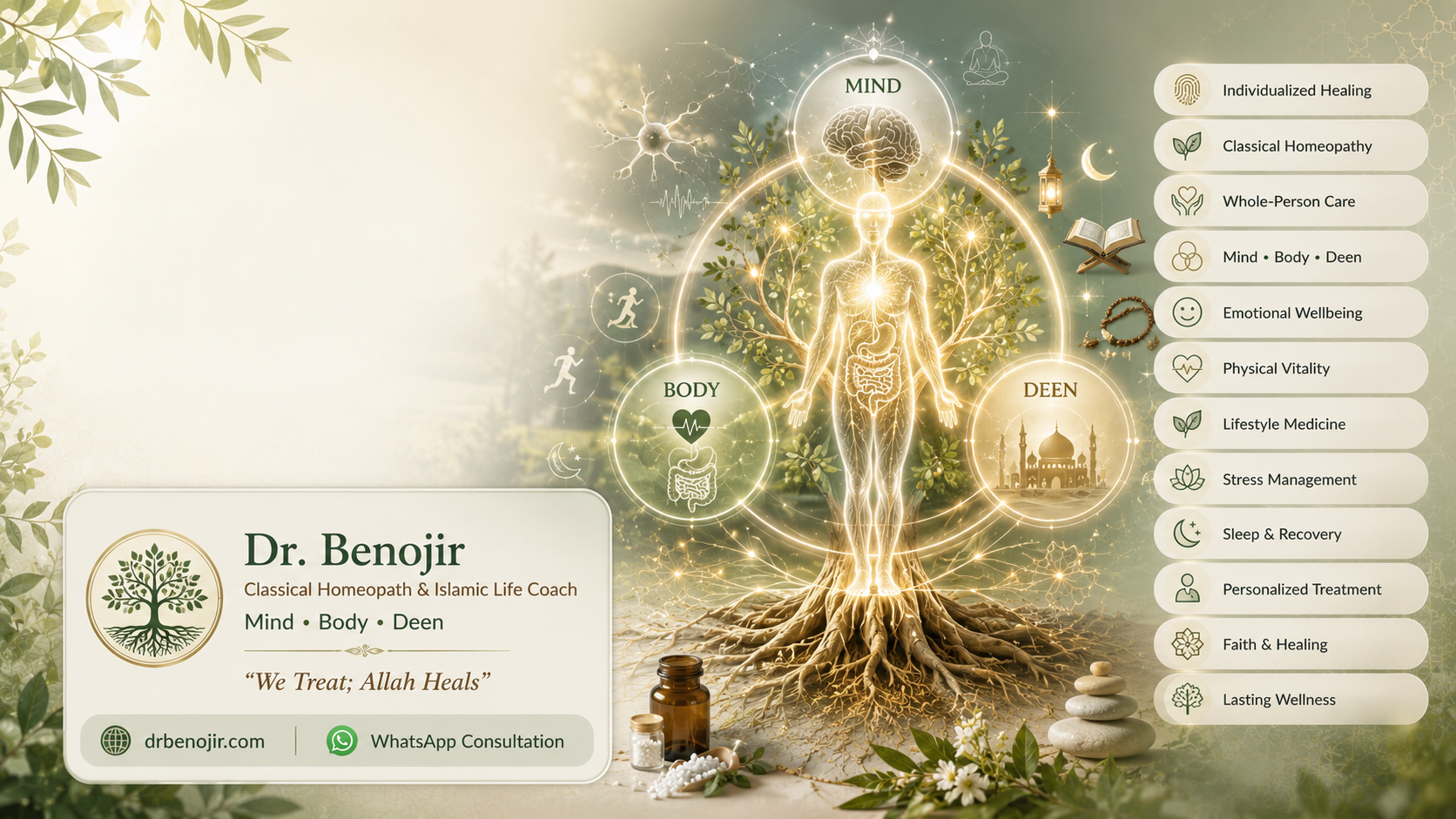
Mind | Body | Deen: A Holistic Vision of Healing
True healing cannot be fragmented. We are not simply bodies that happen to have minds and souls. We are integrated beings — and every layer of our existence influences the others.
Mind
Mental health is physical health. Anxiety, depression, trauma, and chronic stress produce measurable changes in immune function, gut microbiome, hormonal balance, and gene expression. Addressing the mind is not 'soft medicine' — it is frontline medicine.
Cognitive patterns matter. Catastrophic thinking amplifies pain. Acceptance and compassion — toward ourselves and others — reduce the physiological burden of stress. Therapy, counselling, journalling, and mindful self-reflection are all valid tools of healing.
Body
The body carries memory. Trauma lives in the nervous system. Chronic illness is often the body's attempt to communicate an unresolved imbalance. Listening to the body — rather than silencing it — is an act of intelligence.
Physical care goes beyond medication. Posture, breathing, movement, food, and touch all communicate to the body that it is safe to heal.
Deen (Faith and Spiritual Wellbeing)
For many patients, spiritual wellbeing is inseparable from physical health. Research consistently shows that a sense of purpose, faith, and connection to something greater than oneself is associated with lower rates of depression, better recovery from illness, and improved quality of life.
In Islamic tradition, the body is an amanah — a trust from Allah. Caring for it is not vanity; it is worship. Illness is understood not as punishment, but as purification — a means of closeness to the Creator. The Prophet Muhammad (peace be upon him) said: 'There is no disease that Allah has created, except that He also has created its treatment.'
Prayer, dhikr (remembrance), gratitude, and tawakkul (trust in Allah) are not separate from healing — they are part of it. A patient who approaches illness with patience (sabr) and trust in divine wisdom heals differently from one who approaches it with fear and resistance alone.
At the same time, seeking treatment is itself a Sunnah. We make our effort — with the best available knowledge, sincerity, and intention. The outcome belongs to Allah.
Common Questions Patients Ask
'Can homeopathy work alongside my current medication?'
In most cases, yes. Classical homeopathy and conventional medicine are not mutually exclusive. Many patients use both simultaneously. However, your homeopath and your doctor should ideally be aware of each other's involvement in your care. Never stop prescribed medication without medical supervision.
'How long will treatment take?'
Chronic conditions generally require longer treatment than acute ones. A useful guideline: expect one month of treatment for each year the condition has been present — though individual responses vary significantly. Acute illness may improve within hours or days.
'Are homeopathic remedies safe during pregnancy?'
Properly prescribed homeopathic remedies are generally considered safe during pregnancy. However, self-prescribing during pregnancy is not recommended. Always work with a qualified practitioner who is aware of your pregnancy.
'What if my symptoms temporarily worsen?'
A brief, mild aggravation after beginning treatment is not uncommon and is often a positive sign that the remedy has connected with your system. However, any significant worsening of symptoms — especially in serious or acute conditions — should be reported to your practitioner promptly.
A Final Word
You are not your diagnosis. You are a complete, irreplaceable person — with a unique history, a particular way of experiencing the world, and a remarkable capacity for healing.
Classical homeopathy honours that uniqueness. It does not see disease as something to be eliminated by force, but as a language to be understood — a message from a system asking for restoration rather than suppression.
Combined with healthy lifestyle choices, emotional awareness, and spiritual grounding, individualized homeopathic care offers a path toward healing that is not just symptom-free — but genuinely whole.
We do our best. We seek knowledge. We take action. And we trust in the One who created both the illness and its cure.
Dr. Benojir
Classical Homeopath & Islamic Life Coach
Mind | Body | Deen
“We Treat; Allah Heals”